Cleaning Routines & Systems
Sunday Reset Routine for a Calm Week
A 45-minute weekly reset that gets your home — and your week — off to a calm start.
Read the post →
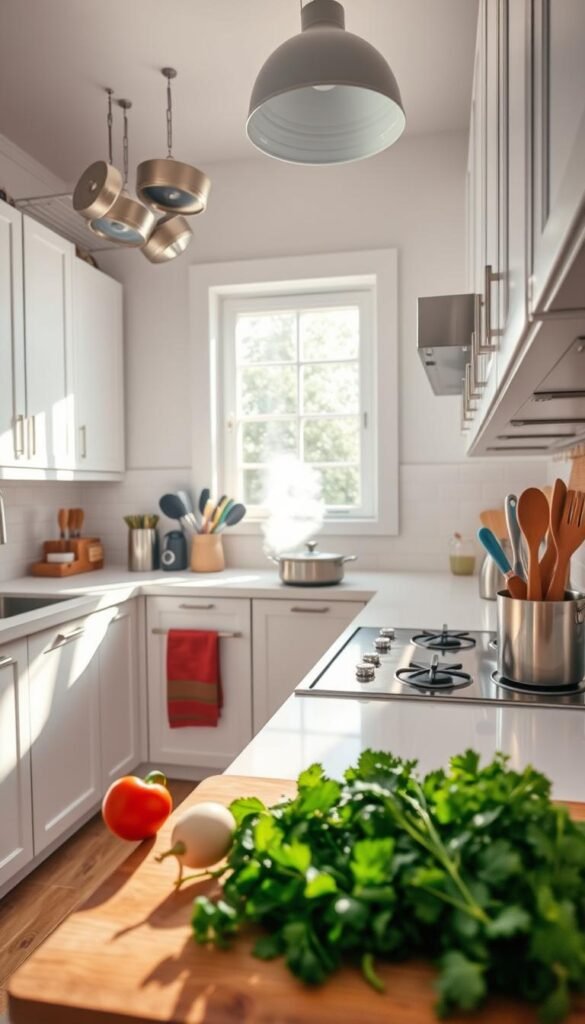
Here's the thing about a messy kitchen: it's rarely one big disaster. It's usually twenty small decisions to leave something "for later" — the cutting board, the measuring cup, the pan that's "still cooling." By the time dinner's done, later has become a sink full of everything at once.
The clean-as-you-go method fixes this at the source. Instead of one big cleanup after cooking, you handle mess in small pieces, while you're already standing right there. It sounds almost too simple to matter. It's also one of the few habits that genuinely changes how a kitchen feels, day to day.
When you tell yourself you'll deal with something later, you're not lying — you genuinely mean to. But later is competing with dinner, with tired feet, with everyone asking what's for dessert. The dishes don't stand a chance. Clean-as-you-go removes the decision entirely: you don't clean up later because you already did it now, mid-task, while your hands were already busy.
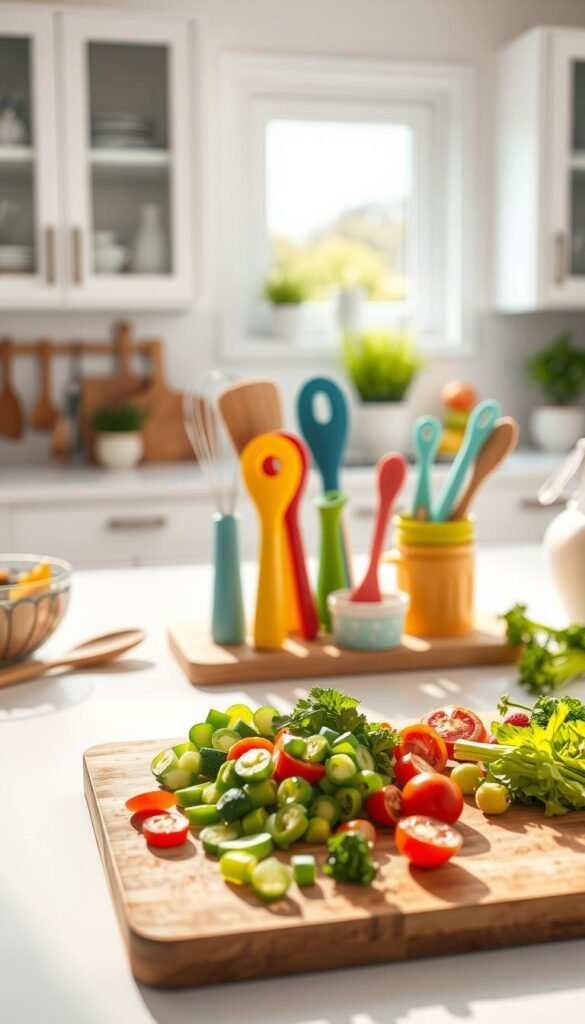
Nothing extra — a sink, a dish towel within reach, and a trash or compost bin close enough that walking to it doesn't feel like a chore. If your bin lives across the kitchen, that alone is often the reason scraps pile up on the counter instead of in it.
| Old habit | Clean-as-you-go swap |
|---|---|
| Stack dirty dishes by the sink "for later" | Drop into hot soapy water the moment you're done with them |
| Leave the cutting board out between tasks | Wipe it the second you set the knife down |
| Sweep crumbs into a pile to deal with after eating | Wipe spills within seconds, while they're still fresh |
Small kitchens actually benefit the most from this method, because there's less counter space to absorb clutter before it feels overwhelming. If your counter space is tight, prioritize rules 2 and 6 above the rest — putting tools and ingredients away immediately, rather than setting them "just for a second," keeps a small kitchen usable through the whole cooking process instead of just at the start.
Don't try to deep-clean appliances or scrub the stovetop mid-cooking — that's a different task for a different time. Clean-as-you-go is about keeping pace with what you're actively using, not stopping to tackle projects. If something needs more than a quick wipe, leave it for your regular cleaning routine and keep cooking.
Does this replace a deeper kitchen clean?
No — clean-as-you-go keeps daily mess from building up, but your stovetop, floors, and appliances still need their own regular cleaning routine on top of it.
What if I'm cooking a big, multi-pot meal?
Focus on rule 1 (washing during wait times) even harder. Big meals have more waiting built in than you'd think, and that's exactly the time to work through what's piling up.
Is this realistic with kids underfoot?
Yes, in smaller doses. Even wiping one spill and rinsing one bowl between tasks adds up over a meal, and it teaches kids the habit by watching it happen.
Pair this with a full kitchen reset routine — the free Weekly Cleaning Schedule includes a simple daily kitchen pass.
Get the Free Weekly ChecklistYou don't need a spotless kitchen at every moment — you need to stop mess from compounding. Pick two rules from this list and start with just those. The rest will follow once the habit clicks.
A 45-minute weekly reset that gets your home — and your week — off to a calm start.
Read the post →The full room-by-room list — kitchen to entryway — for a home that feels lighter today.
Read the post →