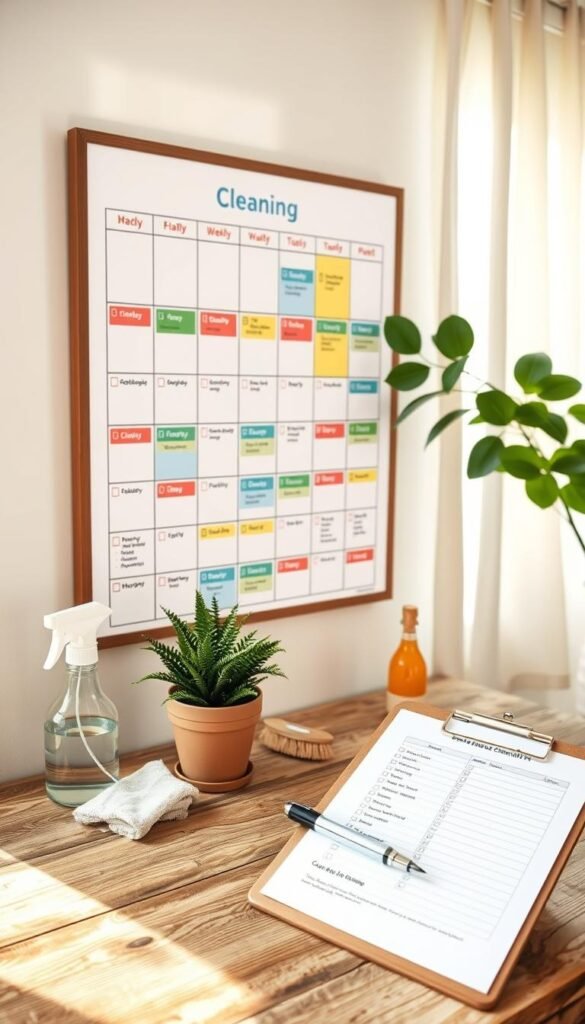
January has a way of making everyone want a fresh start — including your home. But a home reset doesn't have to mean an exhausting weekend of deep cleaning every single room at once. It works much better broken into small, doable pieces you tackle over the month, one focused zone at a time.
This checklist is organized into four weeks, each with its own theme: the kitchen, the closets and bedrooms, the living spaces and paperwork, and finally the systems that keep the whole reset from quietly undoing itself by March. Work through it at your own pace — one section a day, or one a week. There's no deadline here except the one that helps you, not stresses you out.
Why this works: January's motivation is real, but it fades fast if the plan feels overwhelming. Small, contained tasks keep the momentum going past week one — and finishing an actual week, start to finish, feels like real progress instead of one more unfinished project.
What you'll need
A donation box, a trash bag, your usual cleaning supplies, and about 20–30 minutes a day. No special equipment, no elaborate system required — this checklist is built to work with what you already have on hand.
Week 1 — Kitchen & pantry
The kitchen carries the most daily use of any room in the house, which is exactly why it's worth resetting first — a cleared, working kitchen makes every other week of this checklist easier to sustain.
Clear expired items from the pantry and fridge. A slow, room-by-room build-up over the holidays usually means more has expired than you'd expect — this alone often frees up real shelf space.
Wipe down shelves as you go, one section at a time. Doing this while items are already out saves a second pass later, and it's far less overwhelming than emptying the whole kitchen at once.
Reset the junk drawer. Keep what you use, toss what you don't, and add a simple divider if it's been a loose pile for a while.
Group pantry items into simple zones. Breakfast, snacks, baking — broad categories are enough to make the pantry easier to shop from all year, not just this week.
Check small appliances you didn't use over the holidays. If something sat unused through a season built for cooking, it's a reasonable candidate to donate.
Week 2 — Closets & bedrooms
Bedrooms and closets tend to absorb whatever didn't have a home elsewhere in the house — this week is about giving those items a real decision instead of another year of just sitting there.
Pull anything you haven't worn in a year into the donation box. Be honest rather than sentimental here — a full season's cycle is usually enough to know whether something's actually in rotation.
Reset the nightstand. Clear it down to what you actually use nightly — a book, a lamp, maybe a glass of water — rather than whatever's accumulated there since fall.
Rotate out-of-season clothes to a high shelf or under-bed storage. This frees up the closet's easiest-to-reach space for what you're actually wearing this season.
Change and rotate bedding as part of the reset. A fresh set on the bed is a small, immediate signal that the room has actually been reset, not just tidied around.
Check under the bed and on closet floors. These two spots quietly collect more than people expect — a quick sweep here often surfaces the easiest donation decisions of the whole week.
Week 3 — Living spaces & paperwork
By week three, the momentum from the first two weeks tends to carry into the shared spaces — this is where the reset becomes visible to the whole household, not just to you.
Clear surfaces down to the essentials. Coffee table, side tables, open shelves — anything sitting out "temporarily" since the holidays gets put away or reconsidered.
Sort mail and paperwork into keep, file, and shred. Paper is one of the fastest-growing forms of clutter in January, between holiday receipts, cards, and the usual mail — a single sorting pass catches most of it.
Reset the entryway. Donate box, a quick wipe-down, everything back in its spot — this is the room that sets the tone for the rest of the house, every single day.
Do a quick digital declutter. Unsubscribe from a few emails, clear your desktop, delete apps you haven't opened in months — a calmer home extends naturally to a calmer phone and inbox.
Week 4 — Systems for the year ahead
The first three weeks clear the clutter. This last week is what keeps it cleared — without a system, most of what gets undone in January quietly creeps back by spring.
Set up or update your home management binder with this year's key dates. Even a simple version — school calendars, appointments, renewal dates — prevents a lot of scrambling later in the year.
Choose one weekly cleaning day and one weekly reset day, and put them on the calendar. A specific day, not "sometime this week," is what actually turns into a habit.
Drop off the donation box. Don't let it sit in the garage for months — schedule the drop-off before the week ends, while the motivation from decluttering is still fresh.
Write down the one system from this month that helped most. A quick note — on your phone, in the binder, wherever you'll actually see it again — means you remember to keep it going once January's momentum fades.
The fourth week is what separates a reset that lasts from one that quietly unravels by March.
Week
Focus
Time
Week 1
Kitchen & pantry
20–30 min/day
Week 2
Closets & bedrooms
20–30 min/day
Week 3
Living spaces & paperwork
20–30 min/day
Week 4
Systems for the year
20–30 min/day
Quick wins if you only have 10 minutes
Clear expired food from one shelf of the fridge.
Fill one small bag for donation — just one.
Sort today's mail instead of letting it pile up.
How to adjust this for your household
Living alone or as a couple: you can likely move through each week faster — consider combining weeks if a section only takes a few sessions to finish.
With kids at home: involve them in their own room's version of week two — even young kids can help decide what still fits or still gets played with.
Coming off a genuinely exhausting holiday season: it's fine to start this checklist in late January or even February — the four-week structure works the same whenever you actually begin.
Small apartments: some weeks may overlap physically (an open kitchen-living space, for instance) — treat them as one combined week rather than forcing an artificial split.
Why the reset stalls (and how to restart it)
Week one took longer than planned, so the rest got abandoned. Each week stands on its own — if week one runs long, start week two anyway rather than waiting to "finish" first.
The donation box never left the house. A full box sitting by the door for weeks quietly undoes the sense of progress. Schedule the drop-off in advance, or keep it in your car until you pass a donation center.
There was no week four. Skipping the systems week is the single most common reason a January reset doesn't last past February — the first three weeks clear things out, but nothing holds that space without week four's habits.
Frequently asked questions
Do I have to start on January 1st? Not at all — the four-week structure works whenever you start it. Many people find the second or third week of January, once the holiday rush has actually settled, is a more realistic starting point.
What if I can't finish a whole week? Move to the next week's theme anyway on your next scheduled day, and circle back to the unfinished section later. Momentum across the whole checklist matters more than finishing any one week perfectly.
How is this different from a general declutter? This checklist is built specifically around January's fresh-start energy and structured into four sequential weeks — general decluttering checklists don't usually include the systems-focused fourth week that keeps the reset from unraveling.
Should I do this every January? Many households find it works well as an annual rhythm — even a home that's already fairly organized benefits from the once-a-year check that this checklist provides.
Want this reset mapped out day by day? The free Weekly Cleaning Schedule turns this checklist into a simple weekly rhythm.
You don't need a perfect January. You need four small weeks that each move your home a little closer to calm — and one system, kept from week four, that makes sure it stays that way. Start with week one, and let the rest follow at your own pace.
Keep reading
You might also like
Home Organization by Room
30 Home Organization Ideas That Make Every Room Feel Instantly Calm
The full room-by-room list — kitchen to entryway — for a home that feels lighter today.
We use cookies to keep ChillTidyNest running smoothly and to understand how the site is used. In the EU/EEA, the UK and Switzerland, analytics only runs if you accept; elsewhere it's on unless you reject it. Cookie Policy