Cleaning Routines & Systems
Zone Cleaning System: Explained Simply
Divide your home into zones and rotate through one per day — no exhausting cleaning day.
Read the post →
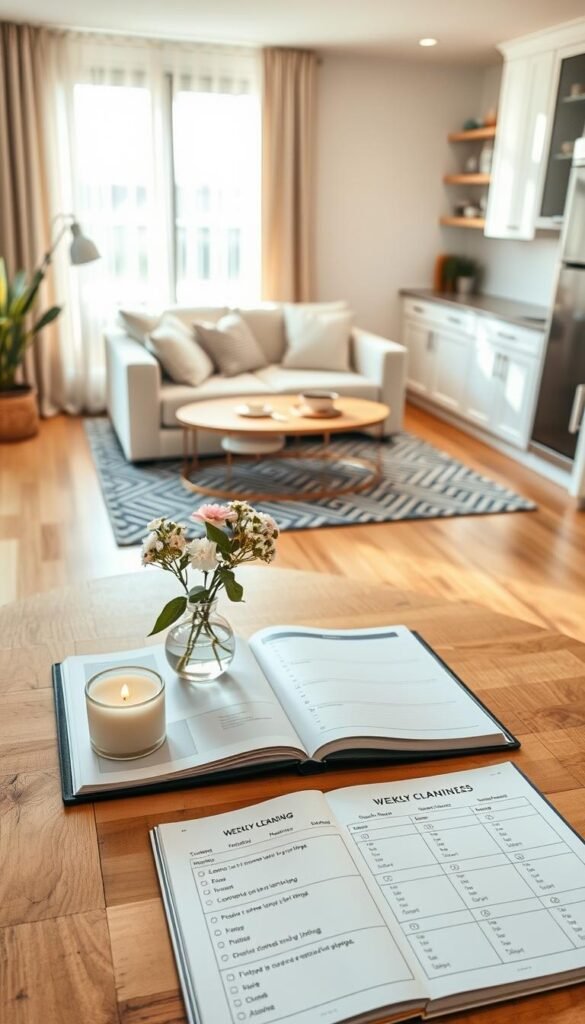
Most cleaning schedules fail for the same reason diets do — they ask for more than real life can consistently give. This one is built differently: one focus area per day, tied to something you already do, with a short nightly tidy to keep things from piling up in between.
A small caddy with your basic cleaning supplies, kept in one place so grabbing it doesn't add friction, and a calendar or wall space for the schedule itself.
Pick one small, honest promise: five minutes in the morning, or ten minutes at night — whichever fits your actual rhythm. Morning person? Do a quick reset after breakfast. Night owl? Do it before bed. The time matters less than picking one that you'll genuinely keep.
| Day | Focus | Tied to |
|---|---|---|
| Monday | Kitchen reset | After breakfast |
| Tuesday | Bathrooms | Before or after work |
| Wednesday | Dusting & floors | Evening wind-down |
| Thursday | Laundry day | Whenever a load fits your day |
| Friday | 10-minute declutter | End of the work week |
| Saturday | Family reset | Shared, all-hands session |
| Sunday | Weekly reset & plan ahead | Evening, before the new week |
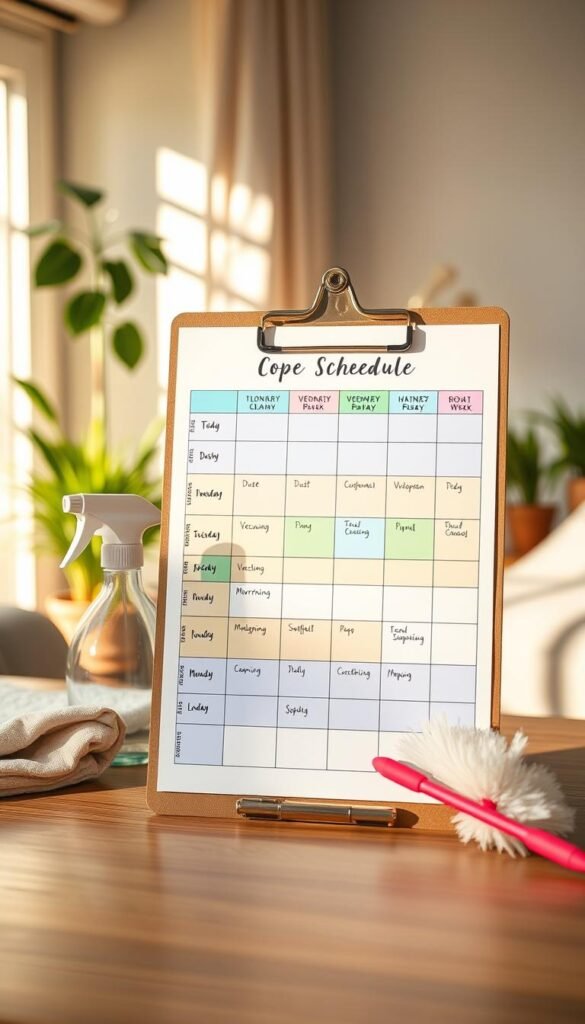
Most abandoned cleaning schedules ask for a big daily block of unscheduled time, which real weeks rarely have to spare. Protecting a small, specific block — and tying it to something you already do — is what makes a schedule survive past the first week.
Skip an hour-long daily block if that's not realistic for your week — ten to fifteen minutes, tied to an existing habit, works better than an ambitious plan you'll abandon. Skip harsh chemicals and complicated supply lists; a small caddy with the basics covers most of what this schedule needs.
What if I miss a day's focus area?
Just move to the next day's task and pick up the missed one next week — the schedule repeats weekly, so nothing is truly lost.
Do I need to follow this exact schedule?
No — swap the days and focus areas to match your real week. The structure (one focus area per day, tied to a habit) matters more than this specific order.
How do I get the rest of the household involved?
The Saturday family reset is designed exactly for this — a short, shared session works better than expecting daily solo participation from everyone.
Want this exact schedule as a free printable for your fridge?
Get the Free Weekly ChecklistA cleaning schedule only works if it fits your actual week. Pick one small promise, tie it to a habit you already have, and let the rest of the schedule build around that.
Divide your home into zones and rotate through one per day — no exhausting cleaning day.
Read the post →Put your home to bed with 7 small tasks that take 10-15 minutes.
Read the post →