Home Organization by Room
Closet Organization for Beginners
A beginner-friendly system — one shelf at a time.
Read the post →
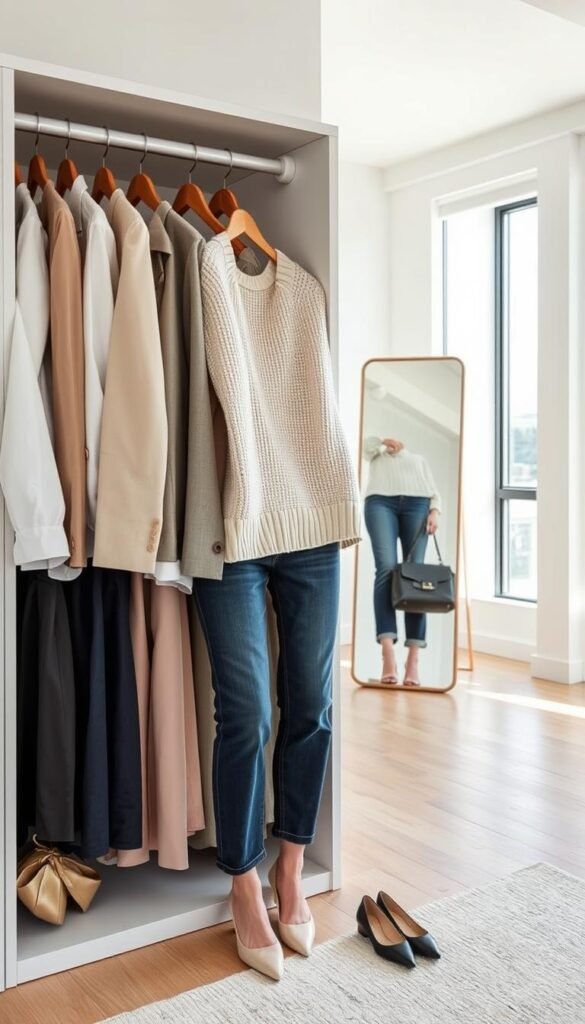
A closet organizing guide tells you where to put things. This is different — it's entirely about the decisions that come before that, the ones that actually determine whether a closet feels lighter this year. No hangers, no bins, no storage systems. Just the process for deciding what stays.
Most closets don't need better organization nearly as much as they need less in them to organize in the first place.
A donation box, a "maybe" bin for genuine uncertainty, and about an hour — this works best done in one focused session rather than spread across many small ones.
| Category | Key question |
|---|---|
| Doesn't fit | Is it worth keeping for a specific, near-term reason? |
| Fits but unworn | Would I buy this again today? |
| Aspirational | Does this reflect my actual current life? |
| Genuinely uncertain | Maybe bin, with a real revisit date |
Nearly every closet declutter produces a pile that doesn't fit neatly into keep or let go — items that are almost right, but not quite. A shirt that fits everywhere except the shoulders. Shoes that look great but are never actually comfortable enough to wear all day. These "almost" items are often the ones that quietly take up the most closet space for the least actual use, precisely because they're good enough to feel wasteful to get rid of but not good enough to reach for. Treat "almost" as its own honest category: if it's been almost-right for over a year without becoming actually-right, that's usually the answer.
The payoff of this process isn't a closet that looks like a magazine spread — it's the small, repeated relief of opening the door each morning to options that all genuinely work. No pushing hangers aside to find the one thing that fits right. No pulling something out only to remember it doesn't quite work anymore. That's the real marker of a fresh start: not how the closet photographs, but how it feels to get dressed on an ordinary Tuesday in February, long after the January motivation has faded.
Skip buying any organizing products before this process is done — you'll have a much clearer sense of what you actually need once the closet reflects what you really wear. Skip trying on every single item; reserve that for genuinely uncertain pieces, not ones you already know the answer for.
What if I can't decide on an item?
Put it in the maybe bin with a specific date to revisit — if you haven't thought about it by then, that's usually your answer.
Should I declutter before or after buying new organizing tools?
Always after — buying storage first means guessing at a size and quantity you don't actually know yet.
How do I handle expensive items I rarely wear?
Cost already spent doesn't change whether an item earns space going forward — it's a harder decision emotionally, but the same question still applies.
How long should the whole process realistically take?
A full closet, worked through in one focused session, typically takes one to two hours — longer for a closet that hasn't been edited in several years, shorter for one maintained more regularly.
Should I declutter shoes and accessories the same way as clothes?
The same core question applies — would I buy this again today — though comfort and condition tend to matter more for shoes specifically than style alone.
Ready to set up the system once the closet's edited down? See Closet Organization for Beginners.
Read the Closet Organization GuideA fresh start in the closet isn't about a better system — it's about a closet that actually reflects your life right now. Make the decisions first, and the organizing that follows becomes dramatically simpler.
A beginner-friendly system — one shelf at a time.
Read the post →A calm, practical starting point for a smaller wardrobe.
Read the post →