Home Organization by Room
30 Home Organization Ideas That Make Every Room Feel Instantly Calm
The full room-by-room list — kitchen to entryway — for a home that feels lighter today.
Read the post →
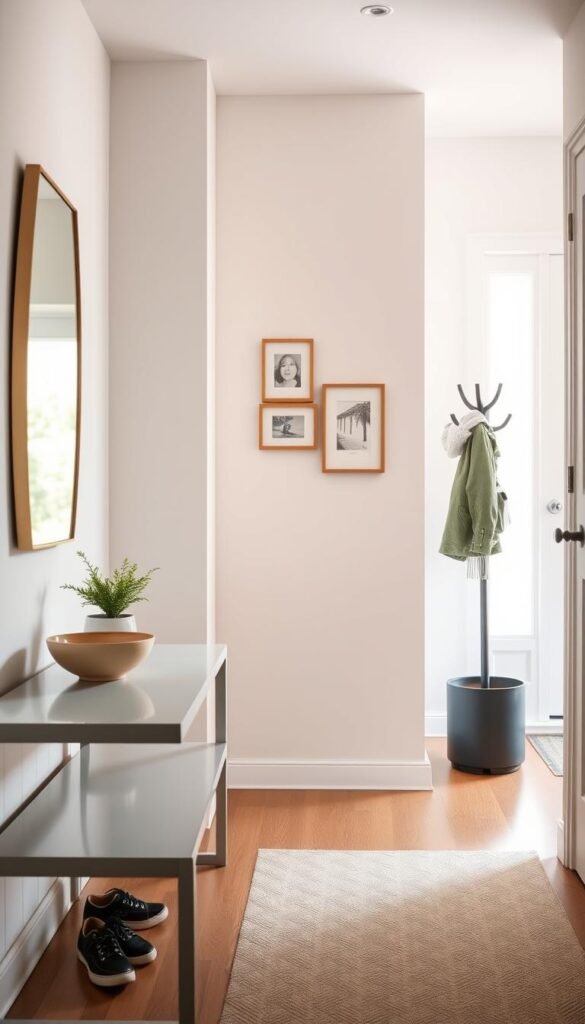
The entryway takes more daily traffic than almost any other spot in the house, which is exactly why it turns into a dumping ground so fast. Shoes drift into a pile. Mail lands and stays. Bags get dropped wherever there's room. None of this is a discipline problem — it's a design problem. The space just doesn't have a system yet.
These ideas build that system from the ground up: define what the space is for, contain the handful of things that actually live there, and make the "put it away" motion easier than the "just drop it" one.
Before adding any storage, decide what this spot is actually for. Is it a quick grab-and-go zone for one or two people, or a shared family hub with coats, shoes, and bags for everyone? Naming it changes what you need — a grab-and-go spot needs one tray and one hook; a family hub needs a bench and labeled bins per person.
| Goal | What stays here | Keep it to |
|---|---|---|
| Grab-and-go | Keys, wallet, one bag, outgoing mail | One tray, one hook |
| Family hub | Daily coats, one shoe basket per person | One bench, labeled bins |
| Minimal touch | Seasonal gear only | Small rug, slim console |
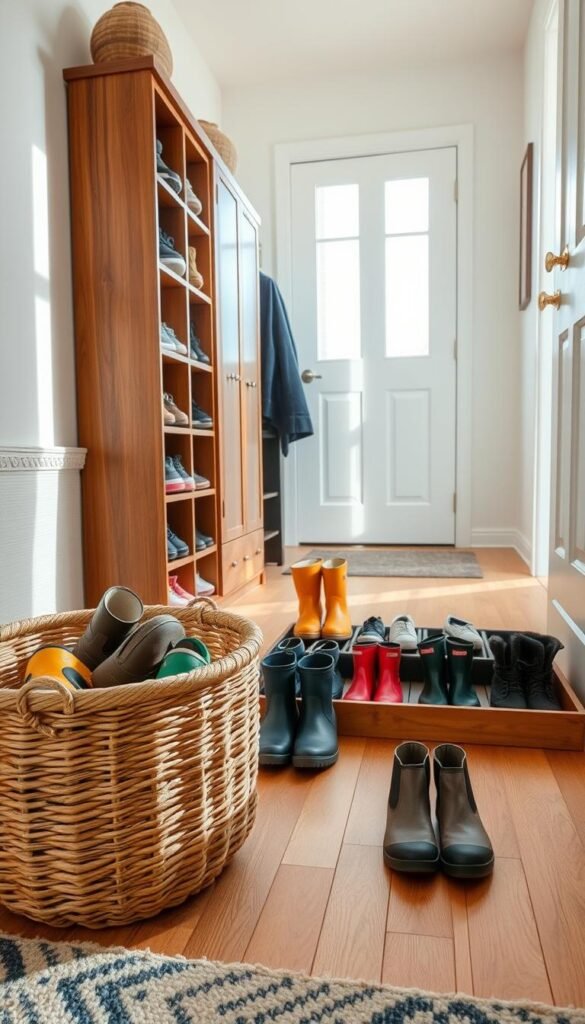
A slightly nicer-looking entryway is more likely to get used consistently — it's simply more appealing to put things where they belong. A coat of paint, a bit of warmer lighting, or a tidy tray on the console can be the difference between a system that sticks and one that quietly gets ignored after a week.
Skip trying to store off-season gear in the entryway itself — that's what closets and garages are for. Skip an oversized furniture piece if your entryway is small; a slim console and a few well-placed hooks beat a bulky bench that blocks the door. And skip more than one shoe basket per person unless someone genuinely has multiple daily pairs — extra capacity just becomes extra clutter.
What if I don't have a dedicated entryway?
Any wall near your main door works — a few hooks and a small tray can create a functional "entryway" even in an apartment with no foyer space.
How do I keep kids' shoes and bags from taking over?
Give kids their own labeled bin at a height they can reach, and make it part of the daily routine — shoes off, straight into the bin, every time they come in.
Do I need matching baskets and hooks?
No — function matters far more than matching decor here. A mismatched but well-placed set of hooks works exactly as well as a coordinated one.
How do I stop guests from adding to the clutter?
A visible, obvious spot — a bench, a clearly empty hook — invites guests to use the system without you having to ask. Clutter tends to build where the "right" spot isn't obvious at a glance.
What's the single highest-impact change I can make?
Adding hooks at a reachable height, before anything else on this list. Most entryway clutter is coats and bags with nowhere to go — solve that first, and the rest of the system matters much less.
Want a full household reset to go with this? The free Weekly Cleaning Schedule includes an entryway reset step.
Get the Free Weekly ChecklistA calm entryway isn't about how it looks — it's about whether everything has a home. Name the space's job, give the handful of daily items a clear spot, and the clutter has nowhere left to land.
The full room-by-room list — kitchen to entryway — for a home that feels lighter today.
Read the post →A gentle, step-by-step reset to start the school year calm instead of chaotic.
Read the post →