Home Organization by Room · Fall Reset

20 Home Office Organization Ideas for a Clear and Focused Mind

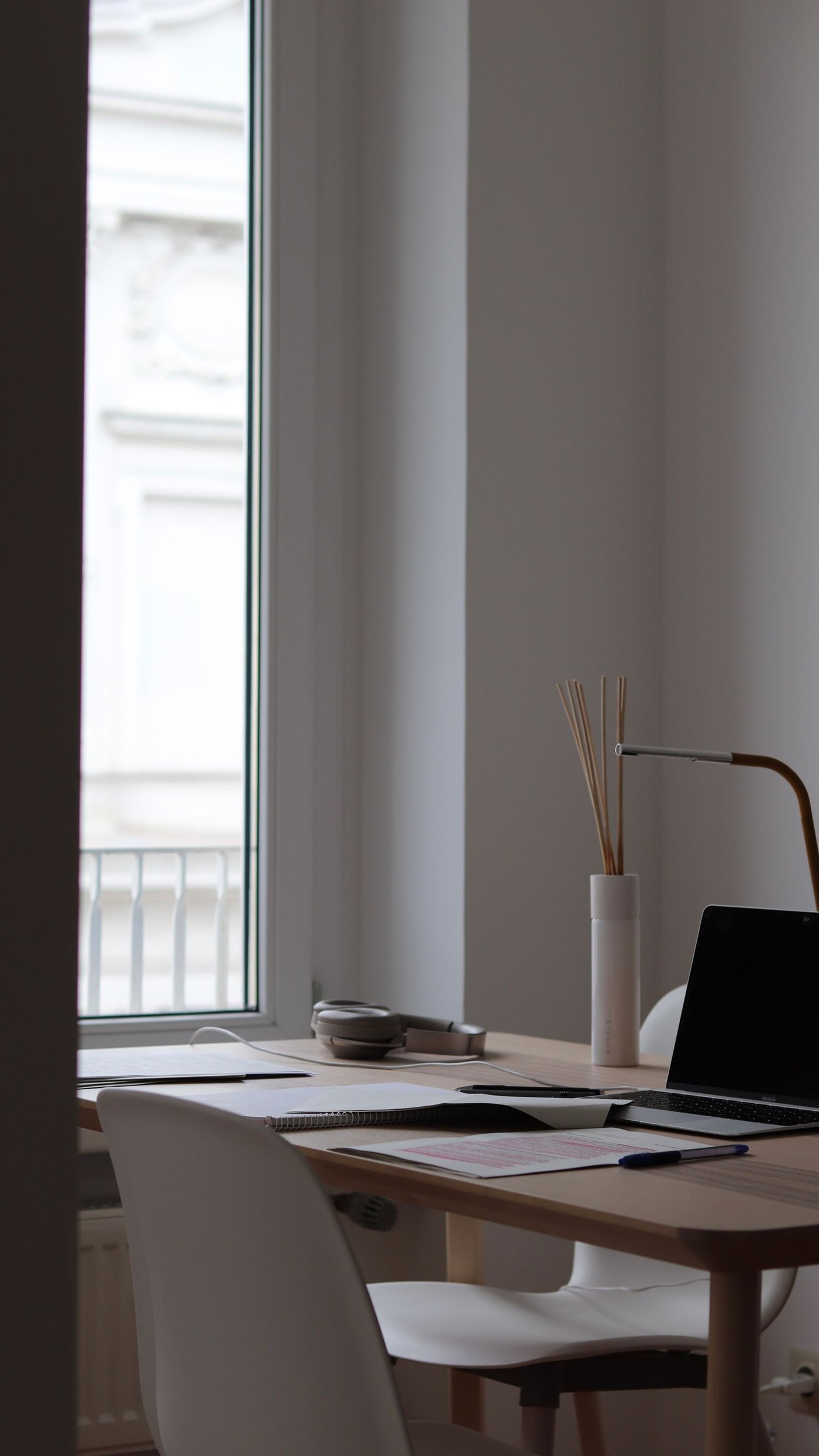
A calm, minimalist home office desk by a window, organized and ready to focus.

A cluttered desk doesn't just look messy — it quietly adds to the mental load of actually sitting down to focus. These twenty ideas are grouped by the parts of a home office that tend to accumulate clutter fastest: the desk surface, cables, paperwork, and the small daily habits that keep it that way.

Why this works: visual clutter competes for attention even when you're not consciously noticing it. A clear desk isn't about looking tidy for anyone else — it's one less thing your mind has to filter out before it can focus.

The desk surface

  1. Keep only what you're actively using today on the desk itself.
  2. Use a small tray or cup for pens and everyday tools instead of letting them spread across the surface.
  3. Add one plant or a single object you like — a desk that's completely bare can feel just as unfocused as one that's cluttered.
  4. Pick one corner as the "everything else" landing spot, so stray items have exactly one place to go, not the whole desk.

Cables & tech

  1. Bundle cables with a simple clip or tie so they don't tangle into a visible mess under the desk.
  2. Keep a small labeled box for spare cables and adapters you're not currently using.
  3. Use a single power strip with a cable sleeve to keep the outlet area from becoming its own separate clutter zone.
  4. Store chargers for devices you use daily in the same spot every time, so you're never searching mid-task.
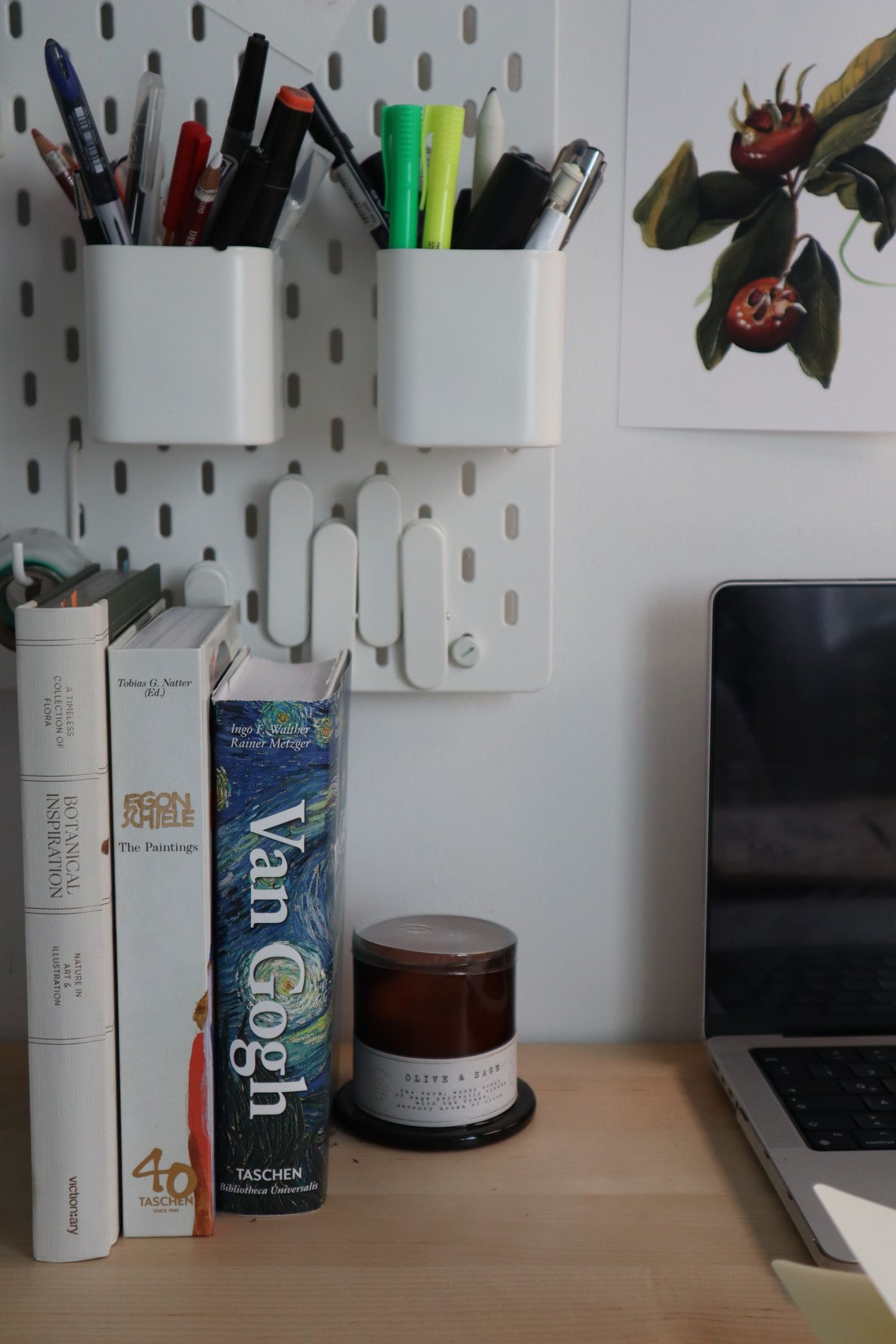
An organized desk with a wall-mounted pegboard for pens and supplies, keeping the surface clear.
A pegboard or wall organizer moves daily tools off the desk entirely, without losing easy reach.

Paperwork & documents

  1. Set up a simple three-category system: to do, to file, to shred — and sort into it as papers arrive, not once a month.
  2. Keep active project papers in a slim folder rather than a loose stack.
  3. File or scan documents weekly so the "to file" pile never becomes a permanent fixture.
  4. Shred or recycle immediately anything that clearly doesn't need to be kept, rather than adding it to a "maybe" pile.

Shelving & storage

  1. Group books and reference materials by how often you actually use them, not by size or color.
  2. Store rarely used supplies in a closed cabinet or bin, keeping open shelving for what you reach for often.
  3. Use a drawer organizer for small office supplies so they don't roll around loose.
  4. Keep one shelf entirely clear as breathing room — not every surface needs to hold something.

Daily habits that keep it this way

  1. Do a two-minute reset at the end of each work session — clear the desk, close open loops, put stray items away.
  2. Handle incoming mail and paperwork the day it arrives rather than letting it stack.
  3. Keep a running list of supplies running low, instead of noticing only when you're out.
  4. Review the whole setup once a season — what worked over summer might need a small adjustment for a busier fall.
AreaSystem
Desk surfaceOnly today's active work
CablesBundled, labeled spares
PaperworkTo do / to file / to shred
Daily habitTwo-minute end-of-day reset

Quick wins if you only have 10 minutes

  • Clear the desk down to today's active work only.
  • Bundle the most visible tangle of cables under the desk.
  • Sort the paper pile into to do, to file, and to shred.

What to skip

Skip trying to keep the desk completely bare at all times — a little personality (a plant, a photo, one object) tends to make a space more sustainable to maintain than one that feels sterile. Skip an elaborate filing system before you know what you're actually filing; start simple and adjust once you see the real pattern.

Frequently asked questions

Which of these ideas makes the biggest difference?
The two-minute end-of-day reset — a desk that starts each day already clear removes most of the daily clutter buildup before it starts.

How do I stop paperwork from piling up again?
Handle it the day it arrives rather than "later" — a pile only forms when decisions get deferred repeatedly.

What if my home office is also used by other family members?
Keep one drawer or shelf strictly yours, and agree on a shared reset routine so the space doesn't quietly become nobody's responsibility.

Do I need special organizing products to start?
No — most of this list works with a tray, a folder, and a bit of cable ties. Add specific products only once you know exactly what you're organizing.

Want a full household system to go with this? The free Weekly Cleaning Schedule includes a paperwork reset step.

Get the Free Weekly Checklist

A focused workspace isn't the most decorated one — it's the one with the fewest things competing for your attention. Clear the desk, bundle the cables, and let the rest of the system follow.

Keep reading

You might also like

Home Organization by Room

Desk Organization for a Clear Mind

A calm, functional desk system that clears mental clutter, not just visual clutter.

Read the post →

Home Organization by Room · Fall Reset

15 Fall Home Office Organization Ideas for Working Parents

A system built to survive interruptions and a shared, busy household.

Read the post →