Home Organization by Room
Pantry Organization on a Budget
A room-by-shelf pantry plan using mostly what you already own.
Read the post →
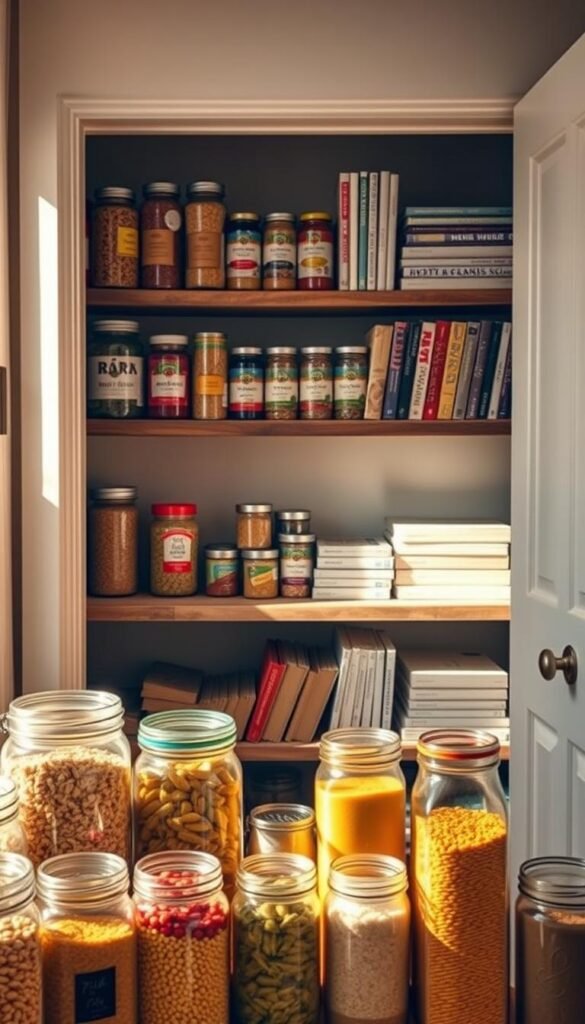
By January, most pantries are carrying two seasons' worth of overlap — holiday baking ingredients that didn't get used, backup groceries from a busy December, and whatever regular staples were already there before any of it arrived. A reset now clears that overlap and sets up zones built around how you actually want to cook this year, not how the pantry happened to fill up.
A donation box for unopened, unwanted items, a trash bag, and about 30-45 minutes to sort and re-zone the shelves.
| Zone | Holds |
|---|---|
| Everyday | Grains, canned goods, daily snacks |
| Use it soon | Items nearing expiration or already opened |
| Holiday overflow | Leftover baking ingredients, labeled and grouped |
| Backstock | Bulk or rarely used items, higher or lower shelves |
The everyday zone is the one doing the most daily work, so it's worth getting genuinely right rather than just designating a shelf and moving on. Think through what a typical quick meal in your household actually requires — pasta and jarred sauce, rice and canned beans, whatever your household's real go-to combinations are — and make sure every piece of that combination lives in the same easy-reach spot. If the pasta is at eye level but the sauce is on a bottom shelf behind the holiday baking overflow, the zone isn't really doing its job yet. The test is simple: could you grab everything for tonight's easiest dinner without bending down or reaching past something else first?
If kids are old enough to make their own snacks or help with meals, involving them in setting up their own zone — even a single labeled shelf or bin at their height — tends to make the whole system hold up better. A pantry organized entirely by an adult's sense of logic doesn't always match how a child actually looks for things, and a five-minute walkthrough of "this is where your snacks live now" goes a long way toward keeping the system from being undone within a week.
Skip tossing usable holiday ingredients just because the season's over — grouping and labeling them means they still get used, not wasted. Skip an elaborate label system before you know which zones you'll actually maintain; simple category groupings are enough to start.
What should I do with unused holiday baking ingredients?
Group them into a labeled "holiday overflow" bin rather than discarding them — many keep well for months and can still be used in regular baking.
How often should the pantry zones be reassessed?
A quick check each season works well for most households — the January reset is really just the most significant of these seasonal check-ins.
Is it worth decanting everything into matching containers?
Not necessary for the reset to work — the zones matter more than the containers. Decanting can be a later refinement once you know the system is working.
What if my pantry is too small for four separate zones?
Combine backstock into the same shelf as "use it soon," since both are lower-priority than the everyday zone — a small pantry can work with just two or three zones instead of four.
How do I keep the reset from sliding back within a few weeks?
Do a quick two-minute check whenever groceries come in, confirming new items land in the right zone rather than wherever there's space — that single habit does more than any amount of upfront organizing.
Want the full month's reset to go with this? See The Ultimate January Home Reset Checklist.
Read the January Reset ChecklistA January pantry reset isn't about starting from empty shelves — it's about clearing the overlap and setting up zones that make the easier choice the visible one, all year long.
A room-by-shelf pantry plan using mostly what you already own.
Read the post →A full kitchen declutter, cabinet by cabinet.
Read the post →