Decluttering & Minimalism
Declutter Your Kitchen Step by Step
A full kitchen declutter, cabinet by cabinet.
Read the post →
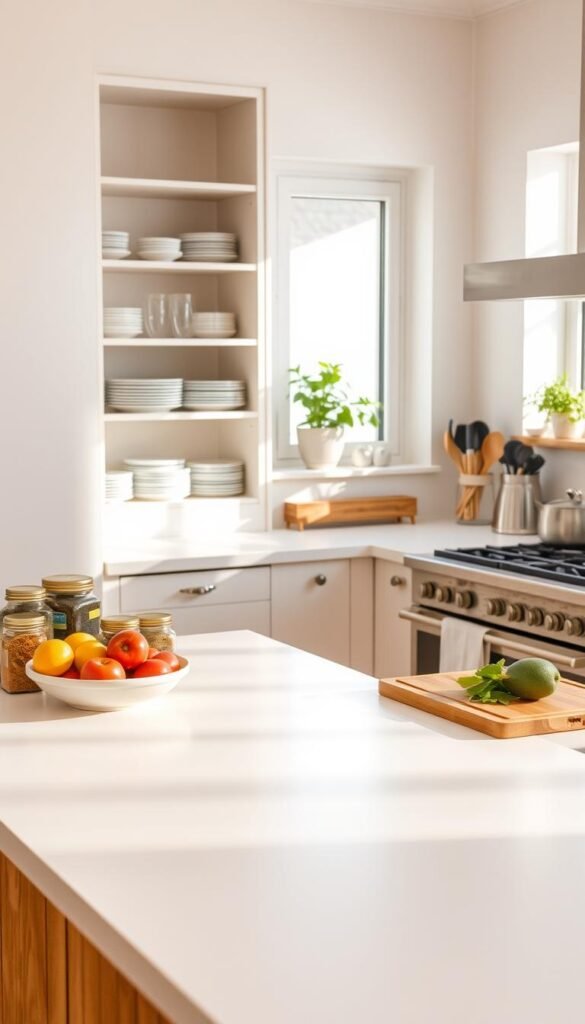
A kitchen doesn't need a renovation to feel calmer — it needs the handful of small systems that make the everyday version of cooking and cleanup easier. These twenty ideas are grouped by zone, so you can work through whichever area is currently causing the most daily friction, rather than tackling the whole room at once.
| Zone | Biggest win |
|---|---|
| Counters | Clear down to daily-use only |
| Cabinets | Store by frequency of use |
| Drawers | Dividers for everything, including the junk drawer |
| Pantry | Zones by category |
With twenty ideas across five zones, it helps to have a clear starting point rather than working through the list in order. Think about which zone you interact with most during a typical day — for most households, that's the counters and the drawer nearest the stove — and start there rather than the zone that looks messiest but sees the least actual daily use. The goal is reducing daily friction, and the biggest reduction in friction almost always comes from fixing the zone you touch most often, not the one that happens to be most visually cluttered.
Not every kitchen has the cabinet space or layout for all twenty of these ideas, and that's fine — the goal isn't to implement the full list, it's to find the two or three that address whatever's currently causing the most friction in your specific space. A galley kitchen with limited counter space benefits most from the counter and drawer ideas; a kitchen with a deep, awkward pantry benefits most from the zone-based storage ideas. Reading through with your actual layout in mind, rather than trying to force every idea to fit, is what makes this list useful rather than aspirational.
The kitchen sees more daily use than almost any other room, which means any system here gets tested constantly — and any weak point in it shows up fast. A drawer without dividers refills with clutter within days, not weeks, simply because of how often it's opened. This is worth keeping in mind when troubleshooting a kitchen system that isn't holding: the fix usually isn't more willpower, it's identifying which specific zone is under the heaviest daily use and giving that one extra structural support — a divider, a designated spot, a clearer boundary — rather than assuming the whole system has failed.
Skip buying matching containers or organizers before you've sorted what's actually being kept — you'll have a much clearer sense of sizes and quantities needed. Skip trying to implement all twenty ideas at once; two or three, actually finished, beat all twenty half-done.
Where should I start if the kitchen feels overwhelming?
The counters — clearing them to daily-use only tends to make the biggest visible difference for the least time invested.
Do I need to buy new storage products to make this work?
Not necessarily — many of these ideas work with containers and dividers you may already have; only buy new once you know the specific size and category you're organizing.
How often should the kitchen be reorganized?
A quick seasonal check is usually enough for a kitchen using this system — the goal is a setup that holds up daily, not one that needs frequent rebuilding.
What if multiple people cook and put things away differently?
A quick shared walkthrough of where things live helps more than a rigid system — the goal is a setup everyone in the household can maintain, not just the person who built it.
Should I organize by how items look or by how often they're used?
Frequency of use, consistently — a kitchen organized purely for visual appeal often works against daily function, which defeats the purpose of organizing it in the first place.
Want the declutter version to go with this? See Declutter Your Kitchen Step by Step.
Read the Kitchen Declutter GuideA calmer kitchen isn't a bigger or more expensive one — it's one where daily-use items have an obvious, easy-to-reach home. Pick the zone bothering you most, and let the rest follow at its own pace.
A full kitchen declutter, cabinet by cabinet.
Read the post →A room-by-shelf pantry plan using mostly what you already own.
Read the post →