Cleaning Routines & Systems
15 Daily Habits for a Cleaner Home
Small daily habits that add up to a noticeably calmer home.
Read the post →
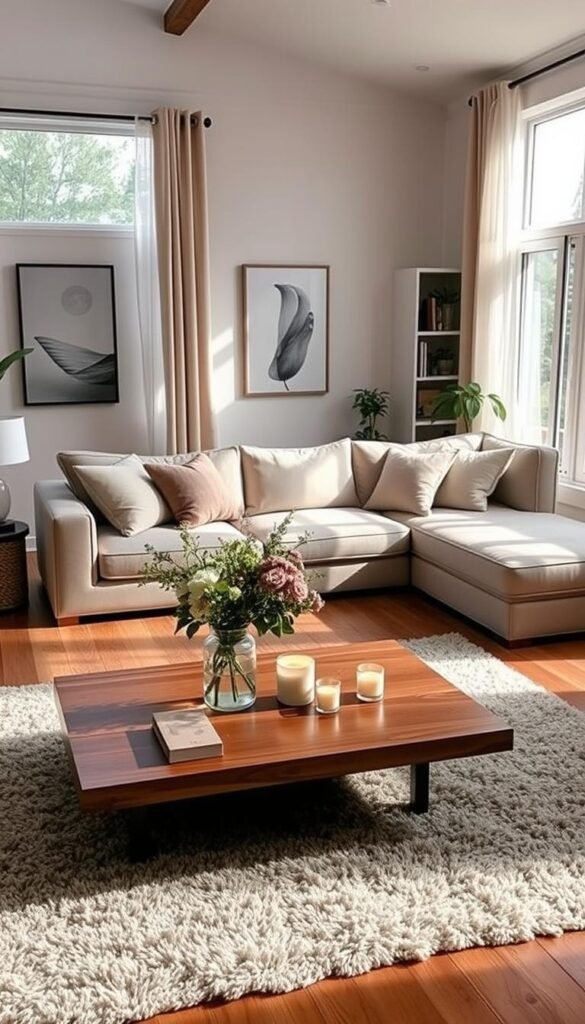
The living room takes the most daily wear of any room in the house — it's where everyone lands at the end of the day, where blankets pile up, where the coffee table slowly collects everything that doesn't have another home. A ten-minute reset doesn't fix any of that permanently, but it makes the room feel calm again, fast, and it's repeatable enough to actually stick.
Ten minutes is short enough that it never feels like a real chore, which is exactly why it's the number that sticks. A twenty- or thirty-minute version sounds more thorough on paper, but in practice it's far more likely to get skipped on a tired evening — and a reset you skip does nothing. The short version, done nightly, adds up to more consistent calm than a longer version done occasionally.
Say your goal out loud, even just once: "I want this room to feel calm in ten minutes." Pick one clear measure of success — clearer surfaces, softer lighting, or cozier seating — and focus there. Trying to fix everything at once is what makes a ten-minute reset turn into an hour.

| Step | Time |
|---|---|
| Clear surfaces | 3 min |
| Cushions & throws | 1 min |
| Floor check | 2 min |
| Group loose items | 2 min |
| Lighting + final glance | 2 min |
A tray for remotes and chargers, a basket for stray toys or blankets, and one lamp with a warm bulb are small, one-time additions that make every future reset faster. None of these are required to start — they just make the ten-minute version easier to repeat.
Skip vacuuming or dusting as part of this reset — that belongs to a weekly routine, not a daily ten-minute one. Skip rearranging furniture or decor mid-reset; that's a separate, occasional project, not part of the quick version.
How often should I do this reset?
Daily works well for most households, especially in the evening — it means you start each morning with a room that already feels settled.
What if the room is really cluttered, not just messy?
Do the ten-minute version first for the quick visual win, then schedule a longer decluttering session separately — the two are different tasks with different goals.
Does this work for open-concept living spaces?
Yes — just extend the timer slightly and focus on the areas that get the most daily use rather than the whole open floor plan at once.
What if I only have five minutes, not ten?
Clear surfaces and fluff the cushions — those two steps alone account for most of the visual difference, even without the floor check or lighting pass.
Should I do this every single day, even on busy nights?
Aim for it, but don't stress over the occasional skipped night. Two consecutive skips is usually the point where the room starts to feel noticeably behind — that's the signal to prioritize it again.
Pair this with a full weekly rhythm — the free Weekly Cleaning Schedule includes a living room reset day.
Get the Free Weekly ChecklistTen minutes won't make the room perfect, and it doesn't need to. Clear surfaces, soft light, and a folded blanket are enough to make a living room feel calm again — repeat it daily, and it barely feels like a task at all.
Small daily habits that add up to a noticeably calmer home.
Read the post →A 45-minute weekly reset that gets your home — and your week — off to a calm start.
Read the post →