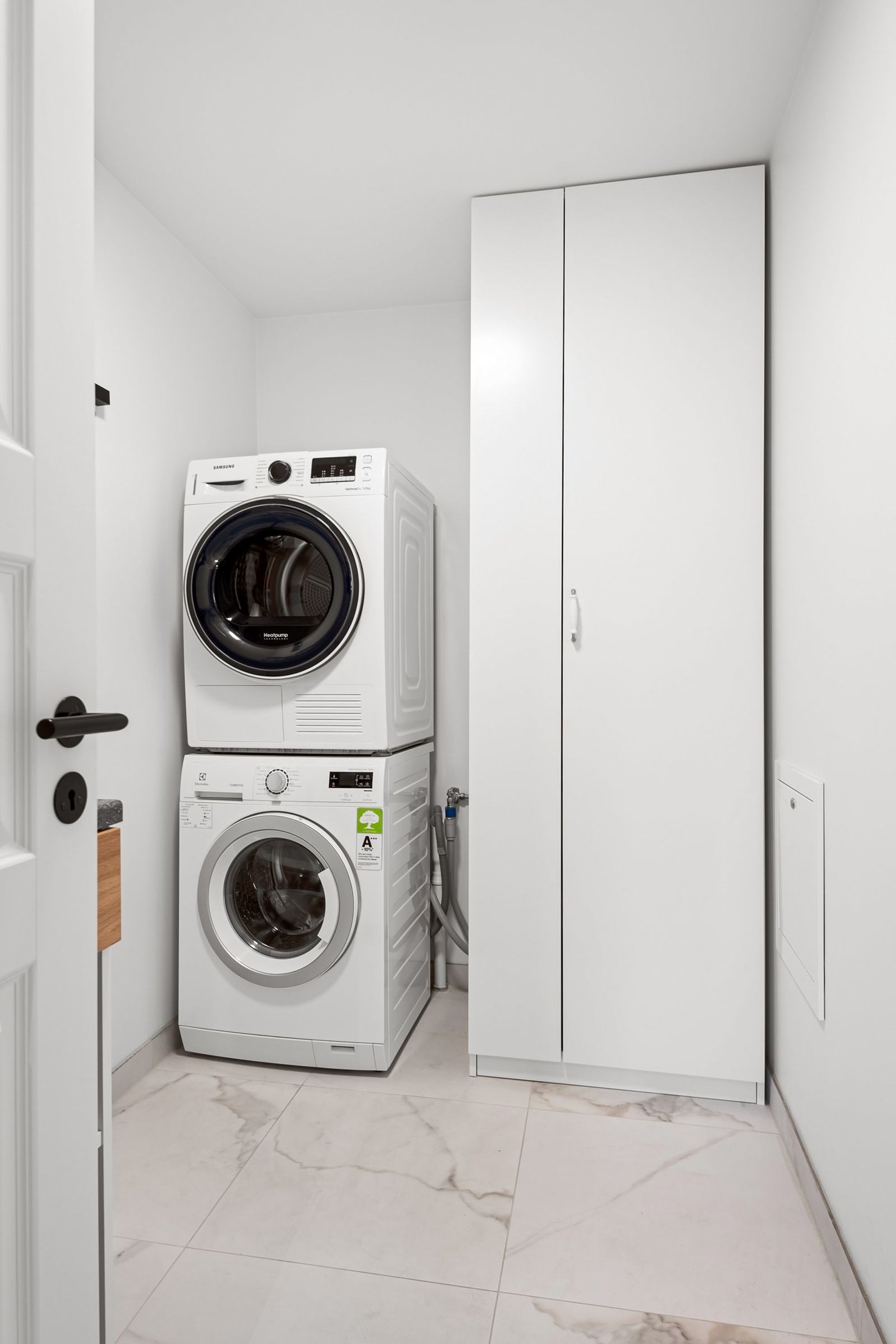
The Fall Laundry Reset: Swapping Seasons Without the Overwhelm
9 min read · Laundry & Household Systems
Laundry gets noticeably heavier in fall, in a literal sense. Sweaters replace t-shirts. Jeans replace shorts. Bath towels get thicker as showers get warmer. The same number of loads suddenly takes longer to wash and dry, and a routine that worked fine all summer can start feeling like it's always one load behind.
This reset isn't a new laundry system from scratch — it's a few adjustments to account for what actually changes in fall, so the pile stops growing faster than you can keep up with it.
Why this works: heavier fabrics take longer to wash and dry, which means the same laundry routine that worked in summer needs a little more time built in — not more effort, just a different rhythm.
What you'll need
Nothing new to buy — just a look at your current routine and where the extra drying time for heavier items needs to go.
The reset, step by step
Separate heavy and light loads more deliberately. Sweaters, jeans, and towels dry much slower than t-shirts and light layers. Washing them together often means light items sit damp, waiting on the heavy ones.
Build in extra drying time. If your routine assumed a quick 30-minute dry all summer, heavier fall fabrics may need closer to an hour. Planning for that upfront avoids the "still damp" surprise at bedtime.
Check care labels on new-to-rotation sweaters. Items that have been in storage since last spring sometimes need a refresher check — wool and delicates often need a gentler cycle than what the rest of the household's laundry gets.
Add a designated spot for damp coats and scarves. Wet-weather outerwear needs to dry somewhere other than the floor or a doorknob — a hook near the laundry area or entryway solves this before it becomes a daily scramble.
Increase wash frequency for daily layers. A base layer worn under a sweater gets used (and needs washing) more often than a single summer t-shirt did — adjust your load frequency accordingly rather than letting the hamper overflow.
Reassess your drying rack space. Bulkier sweaters need to lie flat or hang with more space between items than summer clothes did — a rack that worked fine in July may be undersized for October.
Heavier fabrics need more time and more space — a small adjustment to the routine, not a bigger one.
What changes
Fall adjustment
Fabric weight
Separate heavy and light loads
Dry time
Add 15–30 extra minutes per heavy load
Wet outerwear
Add a dedicated drying hook
Wash frequency
Increase for daily base layers
Quick wins if you only have 15 minutes
Sort today's laundry into heavy and light piles before starting a load.
Add a hook near the door for damp coats and scarves.
Check one wool or delicate item's care label before it goes in with everything else.
How to adjust this for your household
Households with kids: expect more loads overall as extra layers, uniforms, and outdoor gear enter rotation — a slightly more frequent wash schedule usually works better than trying to fit fall's bulk into summer's cadence.
Small households or single loads a week: prioritize separating heavy and light over anything else on this list — it has the biggest impact on whether laundry actually gets fully dry in one pass.
Homes without a dryer: build extra rack or line-drying time into your weekly plan now, since heavier fall fabrics can take a full day longer to air-dry than summer clothes did.
What to skip
Skip trying to wash everything on one setting just because it was easier in summer — heavier fabrics genuinely need a different cycle and dry time. Skip overloading the dryer to fit more sweaters in one cycle; underfilled, properly spaced loads actually dry faster overall.
Why laundry backs up when the season changes
The routine didn't get more time, even though loads take longer. If a wash-and-dry cycle now takes 20 minutes longer per load, that time has to come from somewhere in the schedule — usually by starting slightly earlier in the day.
Damp outerwear went straight into the hamper. Wet coats and scarves left in a laundry basket can make everything nearby damp and musty — dry them separately first.
Nobody adjusted their expectations. A load that used to be "done" in one dryer cycle might now need two — checking before assuming saves a lot of "still slightly damp" frustration.
Frequently asked questions
Should I do more loads per week in fall? Often yes, especially for households with kids adding daily layers — a slightly higher weekly load count is normal and not a sign anything's going wrong.
How do I know if a sweater needs special care? Check the care label before its first wash of the season — wool and other delicates often call for a cold, gentle cycle or air-drying rather than the dryer.
What's the best way to dry bulky sweaters? Laying flat, rather than hanging, helps sweaters keep their shape — hanging can stretch the shoulders over time, especially with heavier knits.
How do I stop wet coats from making the whole entryway smell musty? Give them a dedicated hook with airflow around it, rather than a crowded coat rack — a coat that dries slowly, pressed against others, is what usually causes the smell.
Want a full household system to go with this? The free Weekly Cleaning Schedule includes a laundry rhythm.
Fall laundry isn't harder — it's just heavier and slower to dry. Build in a little more time, separate by weight, and the pile stops feeling like it's always one step ahead of you.
Keep reading
You might also like
Laundry & Household Systems · Fall Reset
How to Prep Your Linen Closet for Fall
Rotate, refresh, reset — a simple system for the season's bedding swap.
We use cookies to keep ChillTidyNest running smoothly and to understand how the site is used. In the EU/EEA, the UK and Switzerland, analytics only runs if you accept; elsewhere it's on unless you reject it. Cookie Policy