Cleaning Routines & Systems
The Clean-As-You-Go Method: Simple Rules That Change Everything
7 simple rules that stop kitchen mess from piling up in the first place.
Read the post →
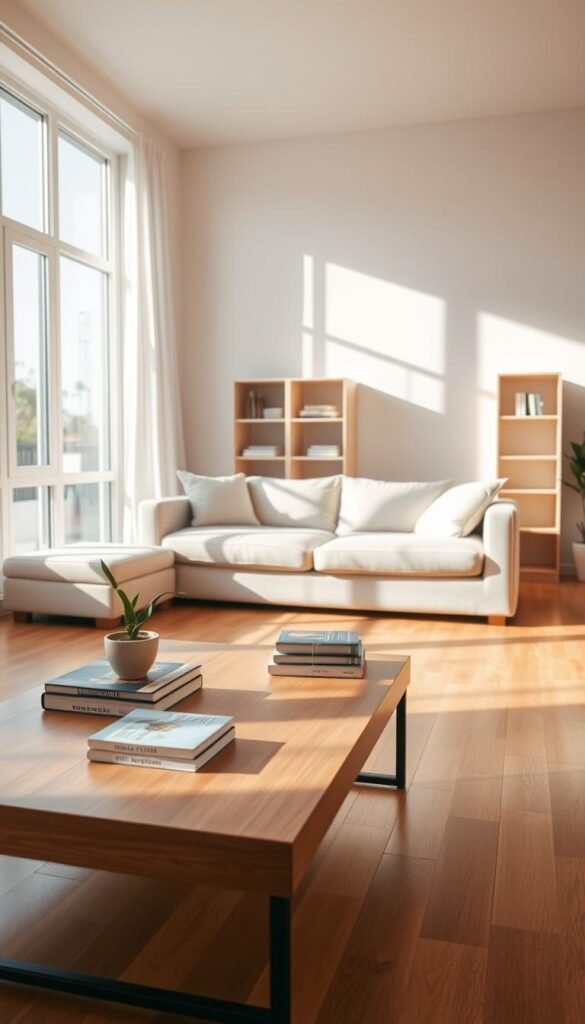
Most cleaning routines fail for a reason that has nothing to do with cleaning: there's too much stuff in the way. You can't wipe a counter buried under mail, and you can't vacuum around a floor full of toys and shoes. A minimalist cleaning routine starts by fixing that — not by buying fewer cleaning products, but by owning less in the way of the cleaning itself.
This isn't about an empty, sparse-looking house. It's about clearing enough that your actual cleaning time drops from an hour to fifteen minutes, because there's simply less to move, sort around, and put away first.
Tidying means returning items to their place. Cleaning means removing dust, spills, and grime. Always tidy first, then clean. Trying to do both at once is what makes cleaning feel endless — you're constantly stopping mid-wipe to find a home for something. Separate the two, and each one goes faster on its own.
Four boxes or bags labeled Keep, Donate, Trash, and Move Elsewhere, a 15-minute timer, and your regular cleaning supplies for afterward. That's genuinely the whole list.
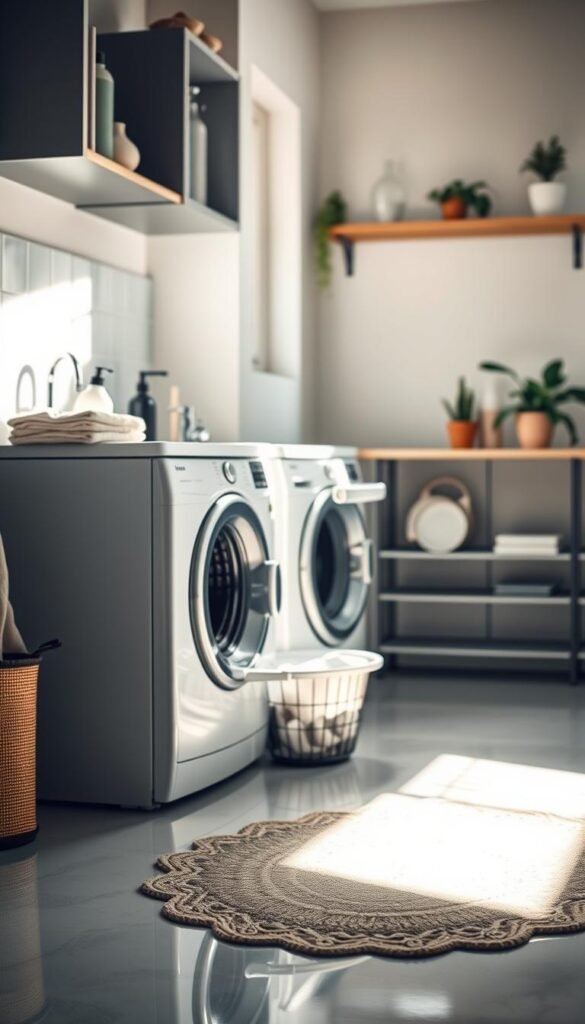
Once a space is decluttered, keeping it that way takes almost no time. Each evening, do one short pass: return anything out of place, clear whatever's landed on surfaces during the day, and do a quick floor check. This is what keeps the "big purge" from being something you have to repeat every few months.
| Action | Why it helps | Time |
|---|---|---|
| Clear counters | Faster wipes, less visual clutter | 5 min |
| Box purge (per room) | Quick decisions, fewer items to manage long-term | 15 min |
| Floor check | Open floors make sweeping and vacuuming faster | 5–10 min |
| Daily reset | Keeps the home steady with almost no ongoing effort | 5–10 min |
A minimalist routine sticks best when everyone in the house follows the same simple rule: if it's out, it gets a home, and if it doesn't have a home, it doesn't stay out. With kids, this might mean one labeled toy bin per category instead of a toy chest with no system — fewer categories are easier for little ones to actually follow than a "perfect" system with ten rules.
Skip trying to declutter the whole house in one weekend — that's how burnout happens, and it rarely finishes anyway. Skip buying new organizing bins before you've decluttered; you'll only know what you actually need once the excess is gone. One room, one 15-minute timer, repeated over several days, beats one exhausting marathon every time.
Do I need to get rid of a lot of things for this to work?
No. Minimalist here means "less in the way of cleaning," not a specific number of belongings. Even clearing 20% of what's on your surfaces makes a real difference in cleaning speed.
How long before the whole house feels manageable?
Most people get through the main living spaces (kitchen, living room, entryway, one bedroom) in about a week of short daily sessions. Closets and storage areas can come later.
What if my family doesn't want to declutter their own things?
Start with shared spaces and your own belongings first. Seeing the difference is usually the best argument — most people come around once they feel how much faster cleaning gets.
Ready to turn this into a weekly habit? The free Weekly Cleaning Schedule builds the daily reset right in.
Get the Free Weekly ChecklistA minimalist cleaning routine isn't about owning less for its own sake — it's about clearing enough that cleaning stops eating your whole evening. Start with one room, one 15-minute timer, and let the rest follow.
7 simple rules that stop kitchen mess from piling up in the first place.
Read the post →A 45-minute weekly reset that gets your home — and your week — off to a calm start.
Read the post →