Home Management & Family Systems
Simple Filing System for Important Papers
One home hub, a handful of categories, and a five-minute weekly reset.
Read the post →
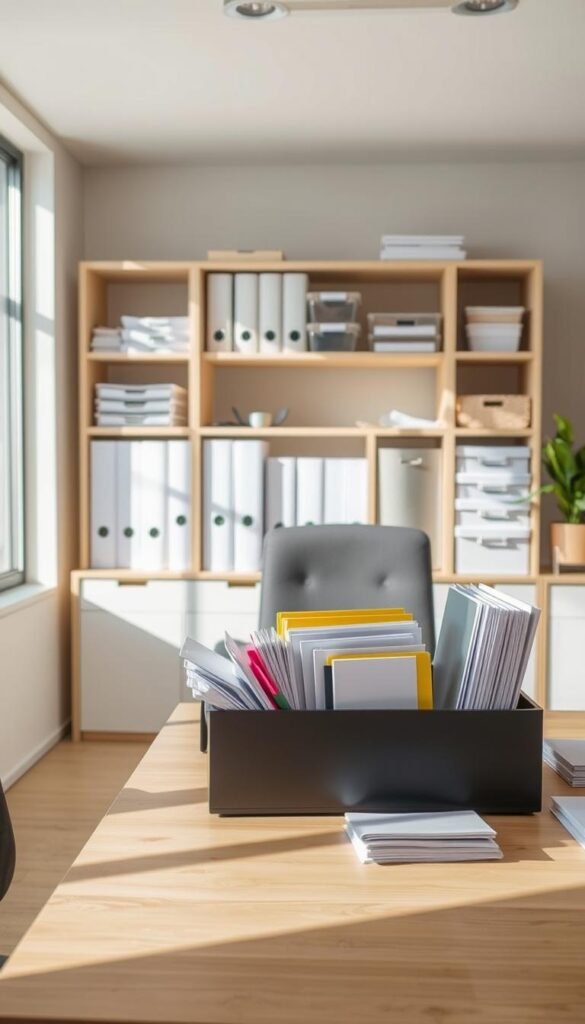
Paper multiplies fast — mail, flyers, kids' school notices, receipts — and without a system, it all lands in the same growing pile. The fix isn't a bigger filing cabinet. It's three simple categories and one processing spot, worked in small, regular sessions instead of one dreaded annual purge.
A shredder or a designated shred bin, a vertical inbox or tray, and folders or a simple filing box for anything you're keeping.
Pick a single spot — the kitchen island, an entry table, or a desk — as your calm processing zone. When paper piles up, clear that one surface first. Touch each piece once and ask: act now, hold briefly, or keep forever? Then move it into the matching category immediately, rather than setting it back down to decide later.

| Rhythm | Task |
|---|---|
| Daily (5 min) | Sort new paper — shred, file, or recycle |
| Weekly (30 min) | File action items you've completed, shred what's expired |
| Monthly | Archive keep-forever items, purge anything that's aged out |
Switching to e-billing where you can, and scanning documents you only need for reference rather than the original, cuts down how much paper enters the house in the first place — making the whole system easier to maintain over time.
Skip trying to sort a huge backlog all at once — a daily five-minute habit will work through it steadily without the burnout of one long session. Skip keeping "just in case" paper indefinitely; if it doesn't fit one of the three categories clearly, it's probably safe to let go.
What should I always shred instead of recycle?
Anything with account numbers, signatures, or personal identifying information — when in doubt, shred rather than recycle.
How long should I keep tax documents?
Many people keep tax records for around seven years, though it's worth checking current guidance for your specific situation.
What about kids' school papers?
Give them their own time-limited category with a set point to review — end of each term works well — and let go of anything beyond what you'll genuinely revisit or want to keep.
Pair this with a full home filing system — see the simple filing guide for important documents.
Read the Filing System GuidePaper clutter isn't a personality flaw — it's a missing system. Three categories, one processing spot, and five minutes a day are enough to keep it from ever piling up again.
One home hub, a handful of categories, and a five-minute weekly reset.
Read the post →One tray, tidy cables, and a two-minute daily reset for a calmer workspace.
Read the post →