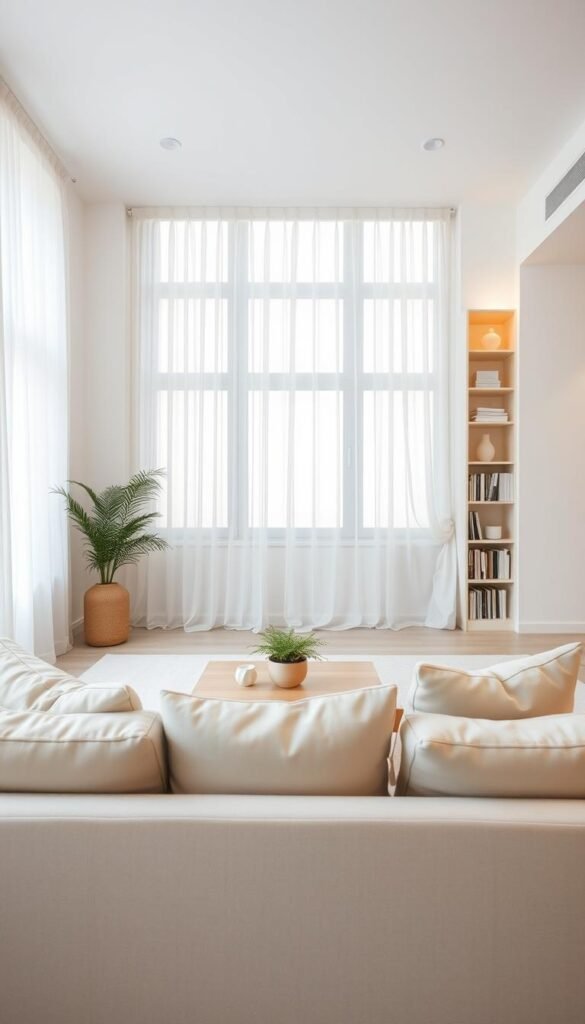
Minimalism gets a reputation for stark, all-white rooms with almost nothing in them — which is exactly why it feels out of reach for most real homes with real families in them. That's not what this is. These twenty rules are about owning what you use and love, and letting go of the rest, in whatever amount that ends up being for your life.
None of these rules require getting rid of everything you own by a certain date, or reaching some final "done" state. They're meant to be picked up gradually — a few now, a few more once those feel natural — and to keep working as an ongoing practice, not a one-time project you finish and move on from.
Why this works: a well-edited room genuinely calms the mind. Fewer objects mean fewer surfaces to dust, fewer decisions about where things go, and less time spent looking for things that have no fixed home.
Mindset rules
Keep what you use and love — nothing else needs a justification.
Quality over quantity, whenever you have the choice. One well-made item you reach for beats three mediocre backups.
Progress over perfection. A slightly lighter home this month counts, even if it's far from "finished."
No guilt about what you let go. An unused item helping someone else is a better outcome than it sitting in a closet.
Surface & room rules
Keep flat surfaces mostly clear. Coffee tables, counters, and dressers hold a small handful of intentional items, not whatever landed there.
One item, one home. If something doesn't have an assigned spot, it will always end up as clutter.
Limit decor to what you'd choose again today. Not everything you've ever been given needs permanent display space.
Walk each room and ask what's actually being used. Unused items in daily-living spaces are the fastest wins.
Clearly defined zones — not empty rooms — are what make a minimalist system actually work day to day.
Closet & belongings rules
If you haven't worn or used it in a year, question why you're keeping it.
Duplicates get edited down to your actual favorite. You likely don't need four spatulas.
Buy less, buy better, and buy slowly. A pause before a purchase prevents most future clutter.
Let go of "someday" items. If the someday hasn't come in a year or two, it's probably not coming.
Routine rules
Do a two-minute daily reset. Small and frequent beats big and rare.
Keep a donation box running year-round, not just during a big yearly purge.
One in, one out for categories that tend to grow — clothes, mugs, books.
Review one drawer or shelf monthly, so small pileups never turn into big ones.
What "minimalist" actually means here
The word tends to conjure a very specific image — bare walls, one chair per room, nothing on the counters. That version works for some people, but it's not a requirement. The version this guide is built around is simpler: every object in your home earns its place because you use it or genuinely love it, and nothing sits around purely out of guilt, habit, or "just in case." A well-loved bookshelf full of books you actually read is just as minimalist, by that definition, as an empty one.
Room-by-room rules
Kitchen: keep counters clear of anything not used daily.
Bedroom: nightstands hold only what you reach for nightly.
Entryway: give every daily item — keys, bags, shoes — one specific home.
Closet: matching hangers and a clear hang/fold system, more than anything else, keep it feeling calm.
Category
Rules
Mindset
1–4
Surfaces & rooms
5–8
Closet & belongings
9–12
Routines
13–16
Room-by-room
17–20
Start with just these three
One item, one home.
A two-minute daily reset.
A donation box kept running year-round.
How to adapt these rules for your household
Families with young kids: apply the room-by-room rules to shared spaces first, and give kids' rooms a lighter version — a few defined toy zones rather than a fully edited-down space.
Collectors or hobbyists: minimalism doesn't mean giving up a genuine collection — it means being honest about which items in a category you actually still love, and letting the rest go.
Shared households: start with your own belongings and any space that's clearly yours before applying these rules to shared areas, which usually need agreement from everyone using them.
Renters: the surface and routine rules matter most here, since closet and storage rules depend somewhat on the space you're working with — focus on what you can control.
Why these rules stop sticking (and how to restart)
Too many rules were adopted at once. Twenty new habits simultaneously rarely stick — three or four, practiced until they're automatic, work far better than all twenty attempted for a week and abandoned.
The two-minute reset got skipped for a few days. A short break is normal, but if it stretches into weeks, that's the single habit worth picking back up first — it's what prevents everything else from sliding.
New items came in without anything leaving. The "one in, one out" rule is easy to forget during busy stretches — a quick monthly check catches this before it becomes a real backlog.
What to skip
Skip aiming for an "empty room" aesthetic if that's not genuinely what feels calm to you — minimalism here means intentional, not bare. Skip trying to apply all twenty rules in one week; pick a handful that address your biggest current frustration and build from there.
Frequently asked questions
Does minimalism mean owning very few things? No — it means owning what you actually use and value, whatever quantity that turns out to be for your household and lifestyle.
How do I get family members on board? Start with shared spaces and your own belongings — a visibly calmer living room is often the best argument for the rest of the household.
What if I relapse into clutter? That's normal, not a failure. Pick back up with the two-minute daily reset and the donation box — the rules work as a return path, not just a one-time fix.
Which rules make the biggest difference first? "One item, one home" and the two-minute daily reset tend to have the most noticeable impact for the least effort — both are habits, not one-time projects.
How long does it take to feel like a minimalist home? Most people notice a real shift within four to six weeks of consistently applying even a handful of these rules — the mindset rules tend to shift fastest, since they change how you evaluate new items coming in, not just what's already there.
Want these 20 rules as a printable reference to keep in your home binder?
We use cookies to keep ChillTidyNest running smoothly and to understand how the site is used. In the EU/EEA, the UK and Switzerland, analytics only runs if you accept; elsewhere it's on unless you reject it. Cookie Policy