Decluttering & Minimalism
The 30-Day Declutter Challenge: One Small Task Per Day
A real 30-day challenge with a different, specific task each day.
Read the post →
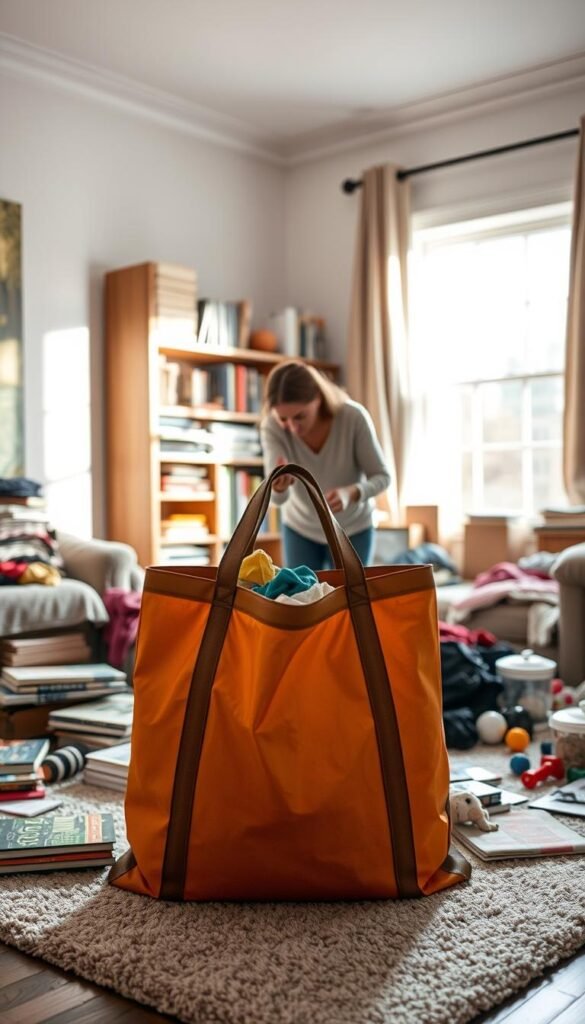
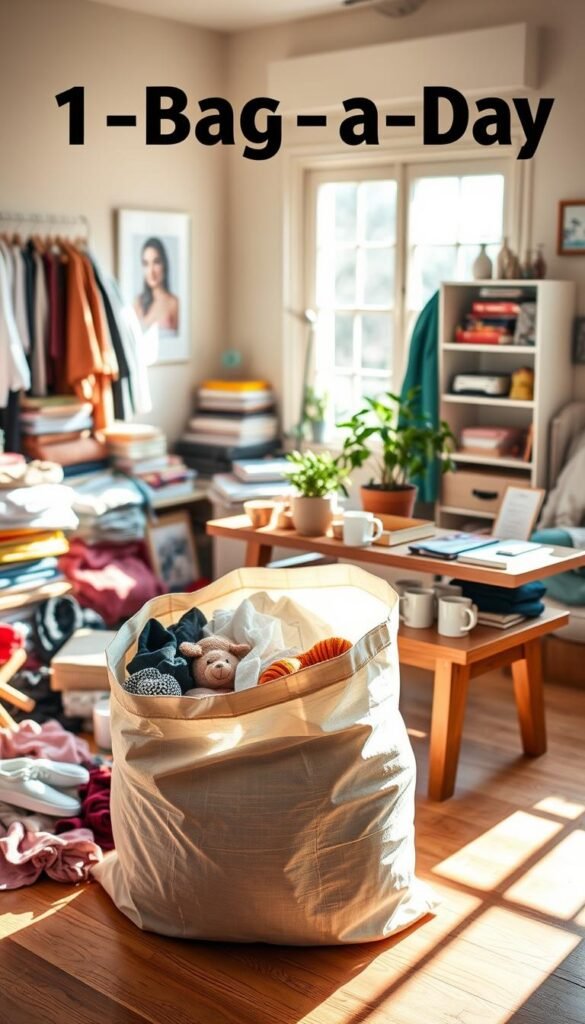
Most decluttering methods ask for more time and energy than a busy life actually has. This one asks for almost none: one small bag, a few minutes, one room or zone, moved out of the house the same day. That's the whole method — and it works precisely because it's small enough to actually finish.
It's a particularly good fit for January, when the urge for a fresh start is real but the actual free time to execute a big decluttering project usually isn't. A bag a day, done consistently, adds up to a genuinely lighter home by the end of the month — without ever needing to clear your calendar for it.
One small to medium bag — a grocery bag or small tote works fine, it doesn't need to be large. A spot by the door to stage it until you leave the house.
| Day | Suggested rule |
|---|---|
| 1–3 | Anything unused in the last year |
| 4–6 | Duplicates — keep your favorite, let the rest go |
| 7–9 | Anything broken you haven't gotten around to fixing |
| 10+ | Anything you wouldn't buy again today |
The single most common way this method fails is a full bag sitting in a corner for weeks, slowly getting picked through and refilled with things going back into circulation. Moving it out — even just to the car, to be dropped off whenever you're next running errands — is what makes the progress permanent instead of temporary.
The method works best when each session has one clear, simple rule rather than a vague goal like "declutter this shelf." A good rule answers the question instantly, without requiring you to weigh each item individually. "Anything I haven't touched in a year" works for almost any category. "Anything with a duplicate" works well for kitchen tools, mugs, and office supplies. "Anything I wouldn't buy again today" is a good later-stage rule, once the obvious decisions are already made. Pick one rule, apply it consistently for that session, and save the harder judgment calls for a separate pass later.
Skip trying to fill a large bag or box — the small size is what keeps each session quick and low-effort. Skip skipping a day out of guilt if you miss one; just pick back up tomorrow. There's no streak to protect here, only steady progress.
What if I can't find a full bag's worth some days?
That's fine — even a few items still counts as progress, and some days will naturally yield less than others.
How long until I notice a real difference?
Most people start seeing a visible difference within two to three weeks of daily bags — by a month, entire zones often feel noticeably lighter.
Can I do more than one bag a day?
Sure, if you have the time and energy — but the method is designed to work even on your busiest days, so one bag is always enough to count as a win.
What size bag actually works best?
A standard grocery bag or small tote is the sweet spot — big enough to feel like real progress, small enough that filling it doesn't require a long session.
Does this work for a whole house, or just a few rooms?
It works room by room across the entire house — the method doesn't change, you're just moving to a new zone once the previous one feels done.
Want a printable tracker to check off each day's bag?
Get the Free Weekly ChecklistYou don't need a free weekend to declutter your home — you need one small bag, a few minutes, and a door to carry it out of. Start today, and let tomorrow's bag take care of itself.
A real 30-day challenge with a different, specific task each day.
Read the post →Twenty real rules for a calmer home without an empty-room aesthetic.
Read the post →