Home Organization by Room
Under-the-Sink Bathroom Organization
A step-by-step system for the trickiest cabinet in the house.
Read the post →
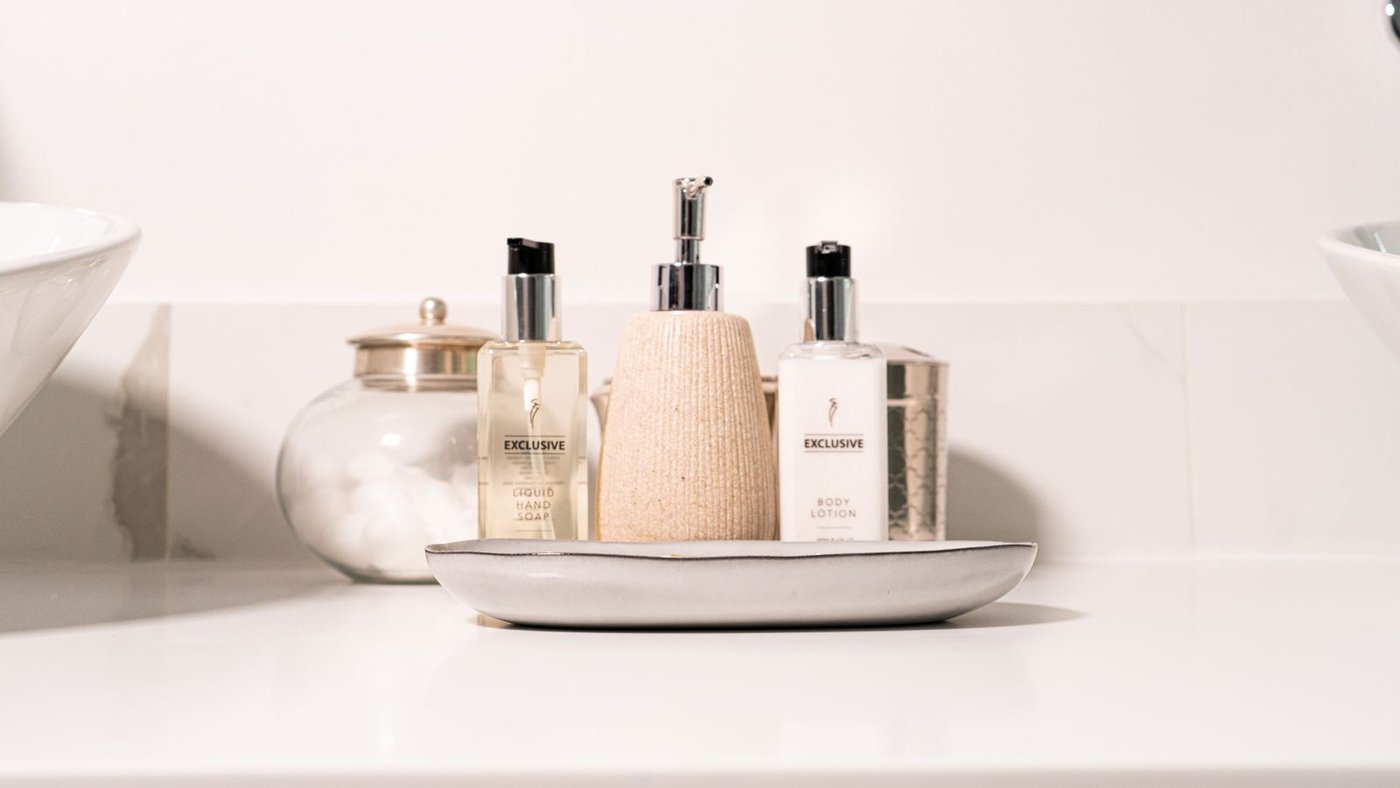
A skincare and beauty drawer tends to grow the same way most collections do — one more product added here and there, rarely anything removed, until what should be a quick morning routine turns into a small daily excavation. Simplifying it isn't about owning fewer beauty products for its own sake. It's about a drawer where everything you actually reach for is easy to find, and everything else has stopped taking up the space.
This is a genuinely quick project — most drawers take less than an hour to fully sort, and the payoff shows up every single morning afterward.
A trash bag, a small tray or set of dividers if you have them, and about 30-45 minutes.
| Category | Common issue | Fix |
|---|---|---|
| Skincare | Expired without anyone noticing | Check dates first, every time |
| Makeup | Duplicates in similar shades | Keep the true favorite, let go of near-duplicates |
| Samples & gift sets | Sit unopened for months | Use within a set window, or let go |
| Tools | Multiples of the same function | One good version beats three mediocre ones |
It's worth being genuinely honest during this step, since it's the one most likely to be skewed by aspiration rather than reality. A product used most mornings is daily use. A product used "most mornings, when I have time" is not — it's occasional, and belongs in the second tier of the system regardless of how often you'd like to use it. This distinction matters because a drawer built around an aspirational routine rather than a real one tends to feel cluttered again within weeks, simply because the "daily" tier was never actually accurate to begin with.
Skip buying new organizing trays or dividers before you've simplified — you'll have a much clearer sense of what you actually need to divide once the excess is gone. Skip keeping products "just in case" that have gone unused for over a year; that's rarely a real case, just an unmade decision.
How do I know if a product has expired if there's no clear date?
Most products have a small open-jar symbol indicating months of use after opening — and any noticeable change in smell, texture, or color is also a reliable sign it's time to let go.
Is it worth decanting products into matching containers?
Not necessary for the system to work — the daily-versus-occasional sorting matters more than uniform packaging, which is a nice-to-have refinement, not a requirement.
How often should this drawer get reassessed?
A quick seasonal check works well for most people — skincare and beauty routines tend to shift slightly with the seasons anyway, which is a natural moment to reassess.
What should I do with barely-used but still-good products?
Many are donatable to shelters or organizations supporting people in transition — check locally, since unopened or lightly used beauty products are often genuinely wanted.
Should makeup and skincare be stored together or separately?
Separately works better for most people — the two categories have different expiration timelines and different daily-use patterns, so keeping them in distinct zones makes both easier to manage.
How do I stop the drawer from filling back up after trying new products?
Give any newly purchased or gifted item a genuine trial period, then make a real keep-or-let-go decision rather than letting it default into permanent storage once the trial ends.
Want the full under-sink system to go with this? See Under-the-Sink Bathroom Organization.
Read the Under-Sink GuideA calmer morning routine doesn't need fewer products for its own sake — it needs a drawer where everything you actually use has an obvious, easy-to-reach spot. Simplify once, and every morning after gets a little easier.
A step-by-step system for the trickiest cabinet in the house.
Read the post →Vertical storage and over-the-door systems for tiny bathrooms.
Read the post →