Home Organization by Room
Pantry Organization on a Budget
A room-by-shelf pantry plan using mostly what you already own, plus $25 in dollar-store bins.
Read the post →
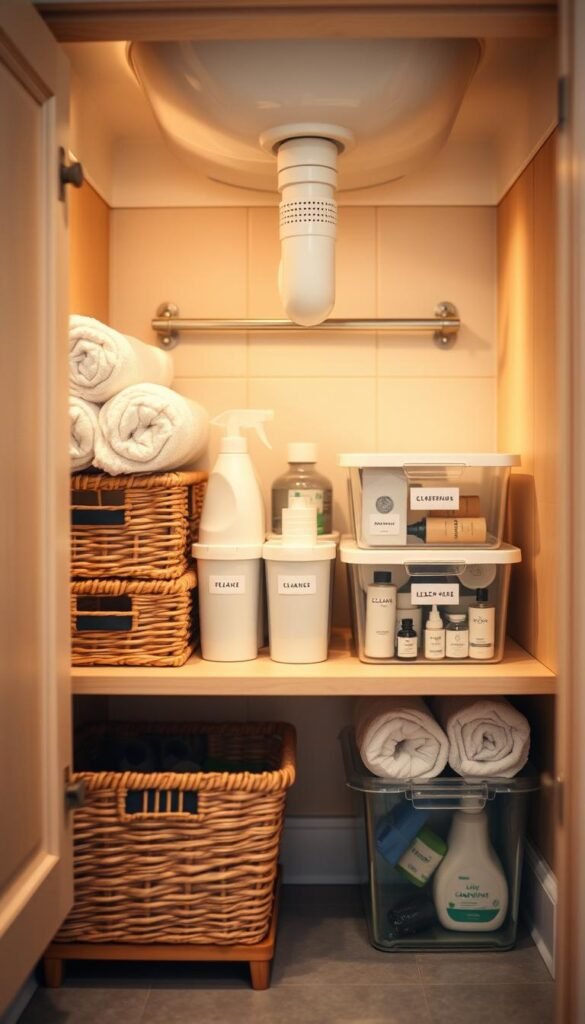
The cabinet under a bathroom sink might be the single most awkward storage space in the average home. A pipe splits the space in two. The corners are deep and dark. And somehow it still ends up holding backup shampoo, cleaning spray, a hair dryer, and three half-used bottles of something nobody remembers buying.
The fix isn't more willpower — it's designing around the pipe instead of fighting it, and picking storage that's actually meant for tight, water-prone spaces.
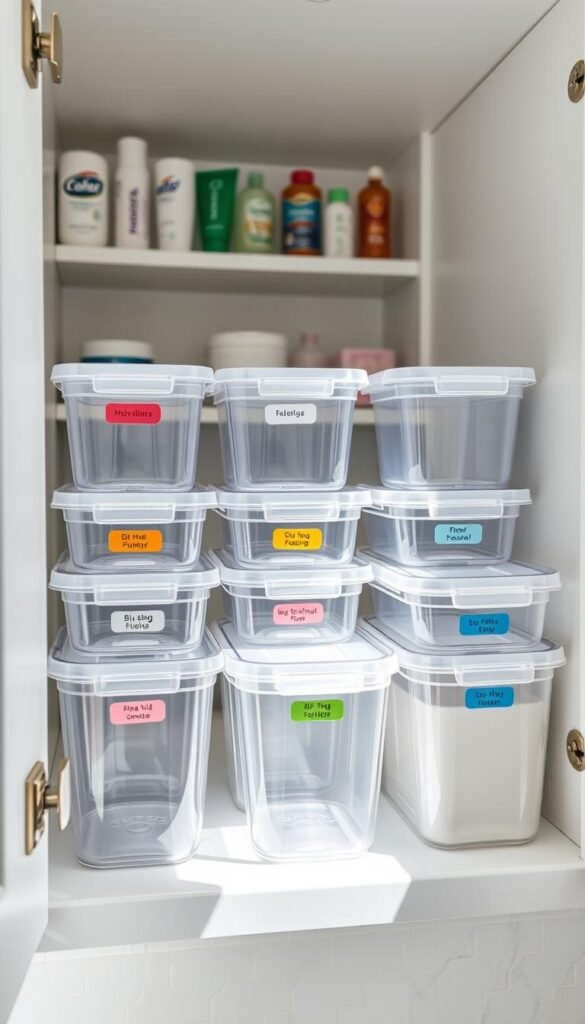
A towel to work on, a trash bag, and storage suited to the space: pull-out bins or a turntable if your cabinet allows, plus a few small, wipeable, water-safe containers. Nothing here needs to be expensive — clear plastic bins from any general store do the job.
The single most common reason this project stalls halfway is buying bins before measuring. Note the cabinet's full depth, the height from the cabinet floor to the underside of the sink basin, and roughly where the pipe sits relative to the sides. A bin that's an inch too tall to clear the pipe, or a turntable too wide for the space beside it, means a second trip to the store — and often a stalled project in between.
| Zone | What goes there |
|---|---|
| Front, eye-level reach | Daily essentials — face and body care |
| Side pockets (around the pipe) | Hair tools, smaller daily items |
| Back corners | Backstock and rarely used items |
| One dedicated bin | Cleaning sprays and supplies, kept separate from personal care |
Small bathrooms don't need to fit everything under the sink. Pick three tight categories — daily skin, daily hair, one cleaning product — and move everything else to a linen closet or nearby shelving. A cabinet trying to hold six categories in eight inches of depth will always feel chaotic, no matter how good the bins are.
Skip buying bins before measuring the cabinet's actual depth and the pipe's position — mismatched bins are the most common reason this project stalls halfway. Skip storing anything you use daily all the way in the back; if reaching it takes effort, it'll end up living on the counter instead.
What if I don't have pull-out drawers and can't install any?
A lazy Susan or turntable solves most of the same "lost in the back" problem for a fraction of the cost and effort, with no installation required.
How often should I redo this?
A quick check every couple of months, plus a fuller redo once or twice a year, is enough for most households.
Is it safe to store cleaning products with personal care items?
It's better to keep them in a separate, clearly labeled bin, especially if kids can access the cabinet — a physical separation adds an extra layer of safety.
What if there's a musty smell even after cleaning?
Leave the cabinet doors open for a few hours after wiping it down so it can fully air-dry, and check for a slow leak at the pipe connection — a small, steady drip is often the real source of lingering odor.
Do I need to buy special "under-sink" storage products?
No — general clear bins and a basic turntable from any home goods aisle work just as well as anything marketed specifically for under-sink use. Measuring first matters far more than the product's label.
Want a full bathroom reset routine to go with this? The free Weekly Cleaning Schedule includes a 5-minute bathroom pass.
Get the Free Weekly ChecklistThe pipe isn't the enemy — it's just a shape you have to plan around. Sort into your four piles, respect the zones the cabinet naturally creates, and even the trickiest storage space in the house becomes genuinely usable.
A room-by-shelf pantry plan using mostly what you already own, plus $25 in dollar-store bins.
Read the post →Ideas that stop clutter before it starts — a defined drop zone and a shoe system that actually gets used.
Read the post →