Cleaning Routines & Systems
The Clean-As-You-Go Method
7 simple rules that stop kitchen mess from piling up.
Read the post →

Waking up to a messy kitchen makes a slow January morning feel even slower. This is a ten-minute nightly reset, built specifically for a season when energy is often lower and mornings need to be as simple as possible — a calm kitchen waiting for you, regardless of how the day before actually went.
Nothing beyond what's already in the kitchen — this is a ten-minute routine using dish soap, a cloth, and the dishwasher you already have.
| Step | Time |
|---|---|
| Load the dishwasher | 2–3 min |
| Hand-wash extras | 2 min |
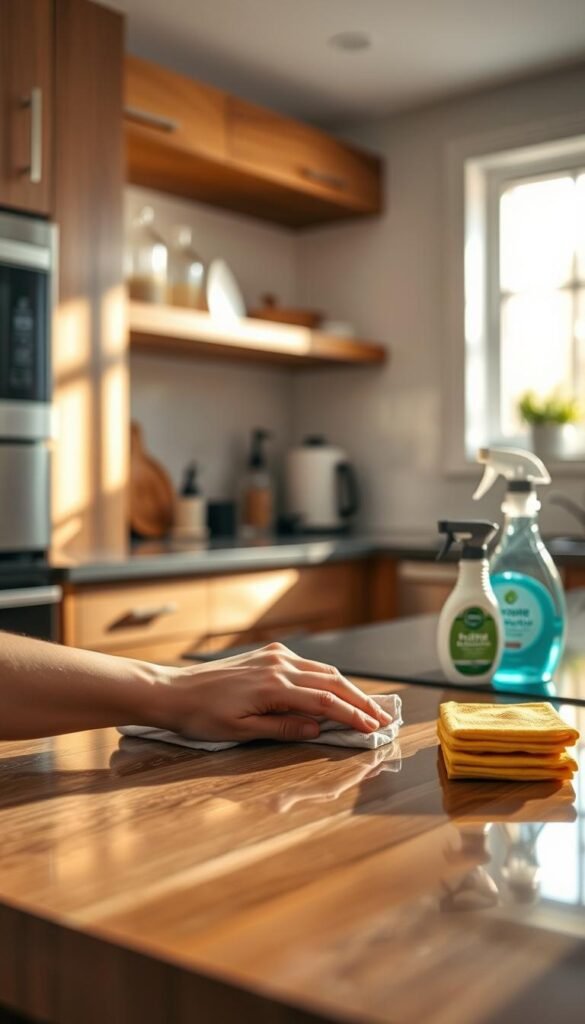
| Wipe counters | 2 min |
| Clear the table + trash check | 2–3 min |
The first week or two of any new nightly routine tends to require real, conscious effort — remembering to do it, deciding to prioritize it over just going to bed. Most people find that somewhere around the two-to-three-week mark, it stops requiring a decision at all and starts happening automatically, the same way brushing your teeth doesn't require willpower anymore. The trick to getting there is protecting the routine during that early stretch specifically — even a minimal, two-minute version on the hardest nights is enough to keep the habit-forming process moving, where skipping it entirely resets the clock.
Shorter days and colder mornings change how a messy kitchen actually feels. In summer, a slightly cluttered counter is easy to ignore on the way out the door into bright morning light. In January, that same counter, seen under artificial light before sunrise, tends to feel heavier — a small visual weight added to a season that's already asking more of most people's energy. A calm kitchen waiting at the start of the day does a disproportionate amount of good precisely because January mornings have less natural momentum carrying them forward already.
Skip deep-clean tasks as part of this nightly routine — the oven, the fridge, and the floors belong to a separate weekly or monthly rhythm. Skip trying to do this routine perfectly every single night; a partial version on a hard night still beats skipping it entirely.
Is this meant to replace a weekly deep clean?
No — it maintains a baseline so the kitchen doesn't build up mess, but floors, appliances, and deeper cleaning still need their own separate routine.
What if I'm too tired most January nights to do this?
Do just the dishwasher and counters — those two steps cover most of the visual difference, and the rest can wait for a better night.
Does it matter if I do this in the morning instead of at night?
The order matters less than consistency — some people prefer a morning version, though waking up to an already-clear kitchen tends to feel especially good during a slower season like January.
What if my kitchen is already a bigger mess than this routine can handle?
Do a separate, one-time deeper clean first to get back to a genuine baseline, then start the ten-minute nightly version — it's built to maintain a reset kitchen, not to dig out from a significant backlog.
Can this work for a household where dinner happens at very different times each night?
Yes — anchor it to "right after the last dish of the day" rather than a specific clock time, and the routine holds up regardless of how variable the evening schedule is.
Want the full month's reset to go with this? See The Ultimate January Home Reset Checklist.
Read the January Reset ChecklistA calm January morning starts the night before, with ten minutes and a kitchen that's ready before you even walk into it. Small, consistent, and genuinely doable — even on the slower days this season tends to bring.
7 simple rules that stop kitchen mess from piling up.
Read the post →A 20-30 minute whole-home morning routine.
Read the post →