Home Organization by Room · Back to School
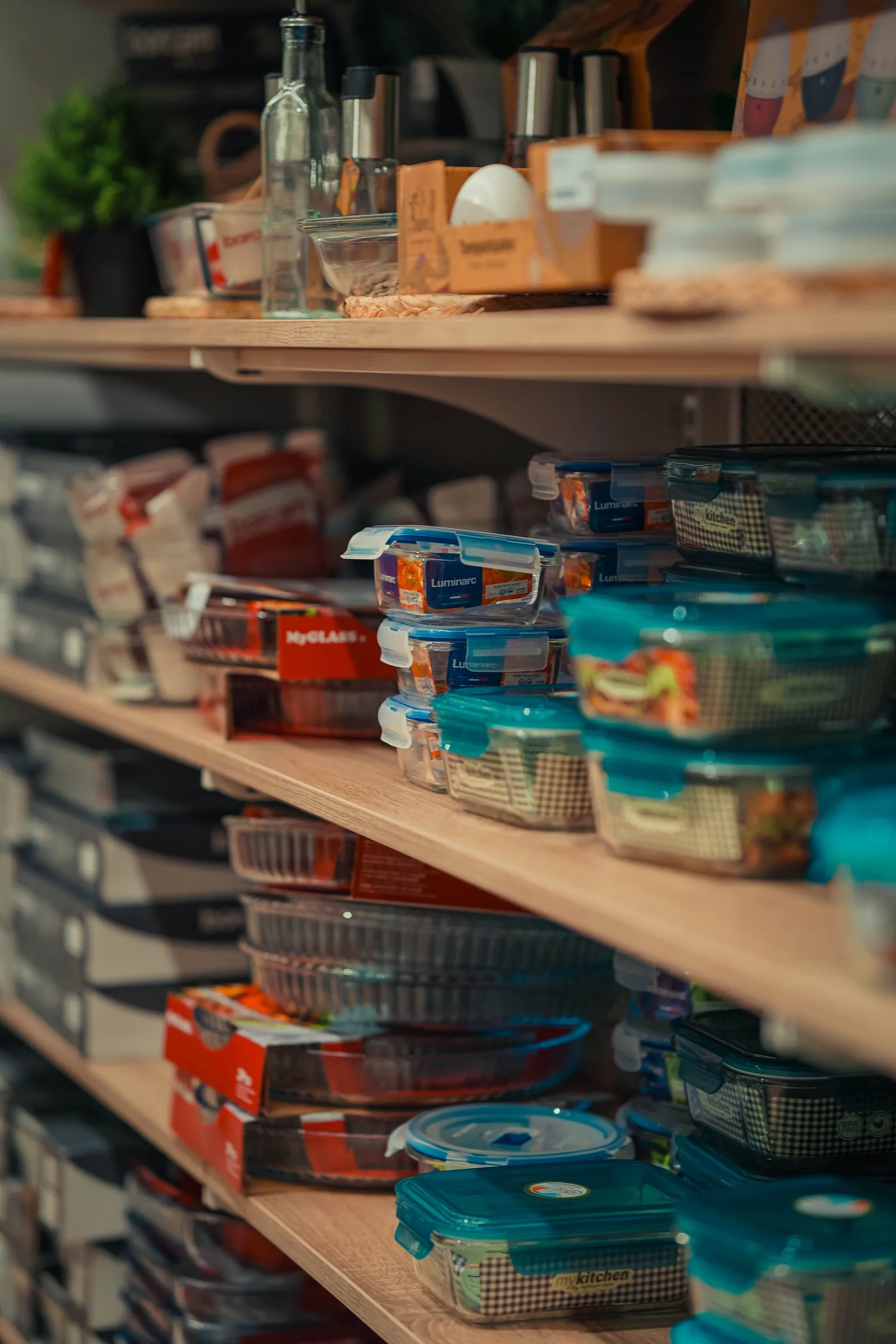
The pantry works differently once school starts. Suddenly the same shelves need to support early breakfasts, packed lunches, after-school hunger, activities, and the inevitable “we're out of the one thing everyone eats” moment.
A back-to-school pantry organization reset is not about decanting every ingredient into matching containers. It is about making the foods you use on busy weekdays easy to see, easy to reach, and easy to restock — while keeping overflow from swallowing the working space.
Think in traffic, not aesthetics: the foods used every school day deserve the easiest locations. Occasional baking supplies and bulk extras can move higher, lower, or farther back.
Before you organize: identify your school-week jobs
Look at what your pantry actually needs to do between Monday and Friday. For most families, the recurring jobs are some combination of breakfast, lunch packing, after-school snacks, and quick dinner support.
| Zone | Purpose | Good location |
|---|---|---|
| Breakfast | Fast weekday staples | Eye level or easy reach |
| Lunch | Shelf-stable lunch components | Near lunch gear |
| After school | Approved grab-and-go choices | Child-accessible if appropriate |
| Dinner helpers | Reliable quick-meal basics | Grouped together |
| Backstock | Duplicates and bulk extras | Less convenient shelf |
Step 1: do a fast shelf-by-shelf edit
You do not need to empty the entire pantry onto the floor. Work one shelf at a time so the reset stays manageable. Remove expired items, empty packages, foods nobody plans to eat, and duplicates that have been scattered into different places.
As you go, group like with like. The goal is to see your real inventory before you decide how much space each category deserves.
Step 2: move school-week staples into the best real estate
Easy-to-reach shelves should reflect what happens most often. If cereal is used five mornings a week and cake decorating supplies are used four times a year, they should not compete for the same prime shelf.
Put breakfast staples together. Create a compact lunch area that connects with your lunch station organization system. Group quick dinner helpers so a busy evening does not begin with searching three cabinets.
Step 3: create an after-school snack zone with boundaries
A dedicated snack zone can reduce both clutter and repeated “what can I have?” questions, but it works best when the boundary is clear. Use one basket, drawer, or defined shelf section rather than turning half the pantry into a snack display.
Stock it with the foods your household normally chooses for this purpose. If children are old enough to choose independently, place suitable options within reach. Keep anything that requires adult help elsewhere.
For refrigerated snacks, create a matching small fridge zone. The pantry and refrigerator do not need identical bins; they just need predictable locations.
Step 4: separate working stock from backstock
Bulk buying can make a pantry look full while the everyday zone remains difficult to use. Keep one working quantity in the easy-access area and store duplicates together as backstock.
When the working item runs low, refill it from backstock. When the last backstock item moves forward, add it to the grocery list. This gives you a simple visual restocking trigger without tracking every package in an app.
A 20-minute back-to-school pantry reset
- Clear expired and empty packages from the busiest shelf.
- Group breakfast foods together.
- Make one lunch basket and one after-school snack zone.
- Move duplicates to a backstock area.
- Write down only the obvious gaps.
Step 5: use containers only where they solve a problem
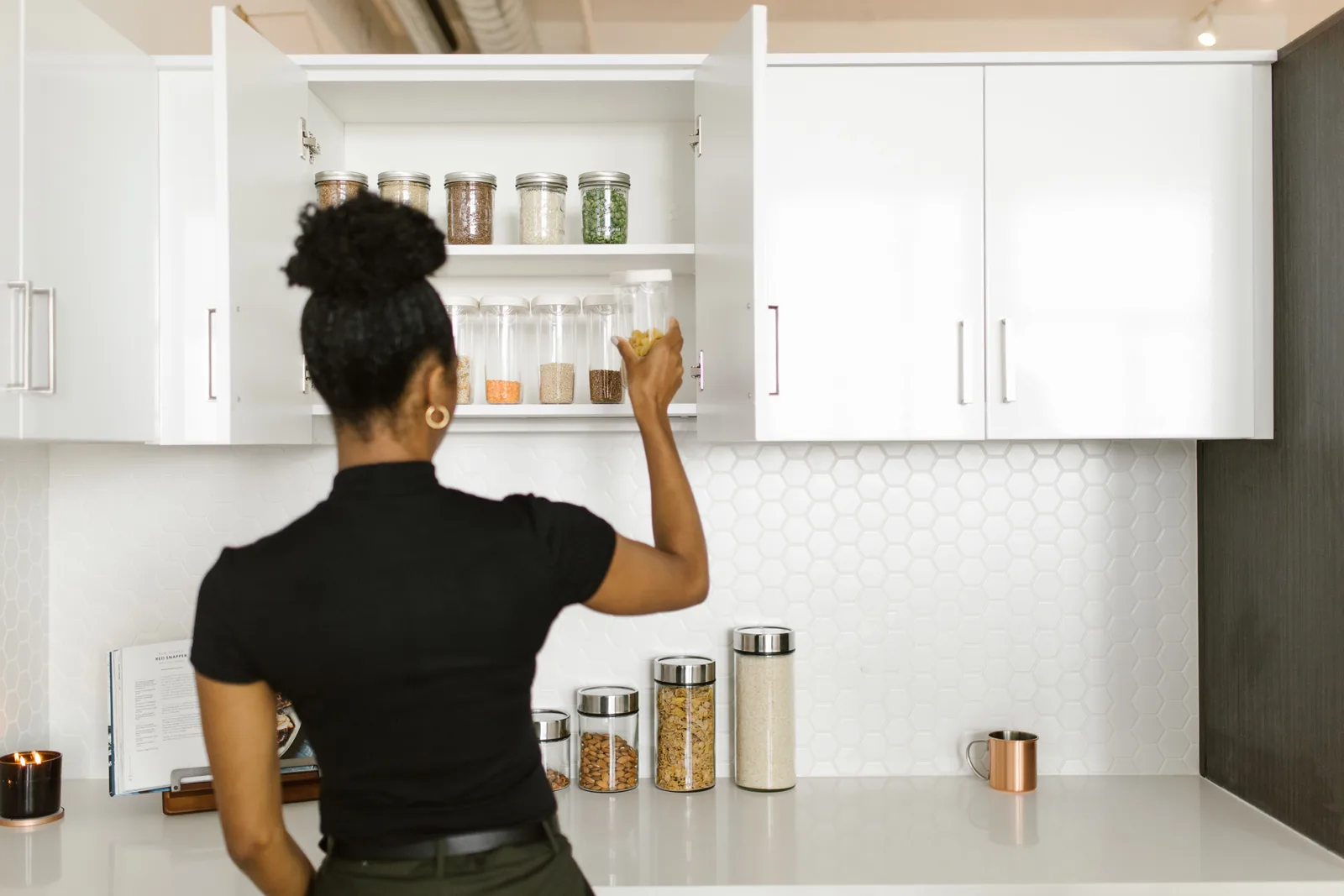
Bins are useful when they stop small packages from spreading, pull a deep shelf forward, or define a shared category. They are not required for every food.
Before buying anything, reuse a basket or box you already own and live with the layout for a week. If the category stays useful but the temporary container is awkward, then you know exactly what size and shape to buy.
This is the same low-cost approach used in our Pantry Organization on a Budget guide.
Step 6: design for the 3 p.m. rush
After-school time can create a second wave of kitchen mess: backpacks arrive, lunch boxes open, snacks come out, wrappers appear, and dinner prep is not far behind.
Make the pantry support the sequence. Snack choices should be quick to access and easy to return. Pair the snack zone with the 10-minute after-school kitchen reset so lunch gear gets emptied and the kitchen returns to neutral before dinner.
Step 7: add a tiny weekly refill
Once a week — ideally before your main grocery shop — scan the four school-week zones. Pull backstock forward, remove empty boxes, check what is genuinely low, and straighten anything that has migrated.
This should take five minutes. If your pantry requires a major reorganization every weekend, the categories are probably too detailed or the working zones are holding too much.
Adjust the system for your space
- Small cabinet pantry: prioritize breakfast, lunch, and snacks; move bulk extras to another storage area if possible.
- Deep shelves: use bins as drawers so items at the back do not disappear.
- Large walk-in pantry: resist spreading one category across multiple shelves. Keep the working quantity compact and backstock separate.
- Multiple children: start with shared categories. Create separate zones only when different needs repeatedly cause confusion.
What not to do during the reset
- Do not decant everything for appearance. Decant only when it improves visibility or use.
- Do not buy a full organizer set first. Test the zones before investing.
- Do not create a snack zone so large that meals disappear behind snacks. Give it a defined boundary.
- Do not hide duplicates in several places. One backstock zone makes inventory visible.
- Do not aim for a pantry that never changes. School schedules, preferences, and groceries change. Your system should be easy to adjust.
Frequently asked questions
How many pantry categories do I need?
As few as make the space easy to use. For a school-year reset, breakfast, lunch, snacks, dinner helpers, and backstock are a practical starting point.
Should kids have their own snack shelf?
Only if independent access is appropriate for your household. A shared family snack zone works just as well as long as the choices and boundaries are clear.
How do I stop snacks from getting forgotten at the back?
Keep the working zone shallow enough to see, rotate older items forward when restocking, and avoid opening several duplicate packages at once.
Do clear containers make a pantry more organized?
Sometimes, but visibility comes from sensible grouping and manageable quantities first. Containers are tools, not the system itself.
Back-to-School Home Systems Series
Build the school-year routine one small system at a time:
- The Back-to-School Home Reset: A Calm Routine for the First Week
- How to Build a Backpack & School Supplies Drop Zone That Stays Tidy
- The After-School Kitchen Reset: 10 Minutes to a Calm Evening
- Back-to-School Morning Routine: The System That Ends the Chaos
- Lunch Station Organization: A Simple System for Busy Mornings
- The Family Command Center: What to Include for the School Year
- How to Reset Your Pantry for Back-to-School Snacking ← you are here
Want the rest of your school-week home systems to stay just as manageable? Pair this pantry reset with the free Weekly Cleaning Schedule.
Get the Free Weekly ChecklistYou do not need a pantry makeover before school starts. Give weekday staples the best shelves, create one clear snack zone, separate backstock, and spend five minutes checking it before groceries each week. That is enough structure to make the busiest parts of the day feel noticeably easier.