Home Management & Family Systems
The Back-to-School Home Reset
Set up the simple home systems that make the first school weeks easier.
Read the post →
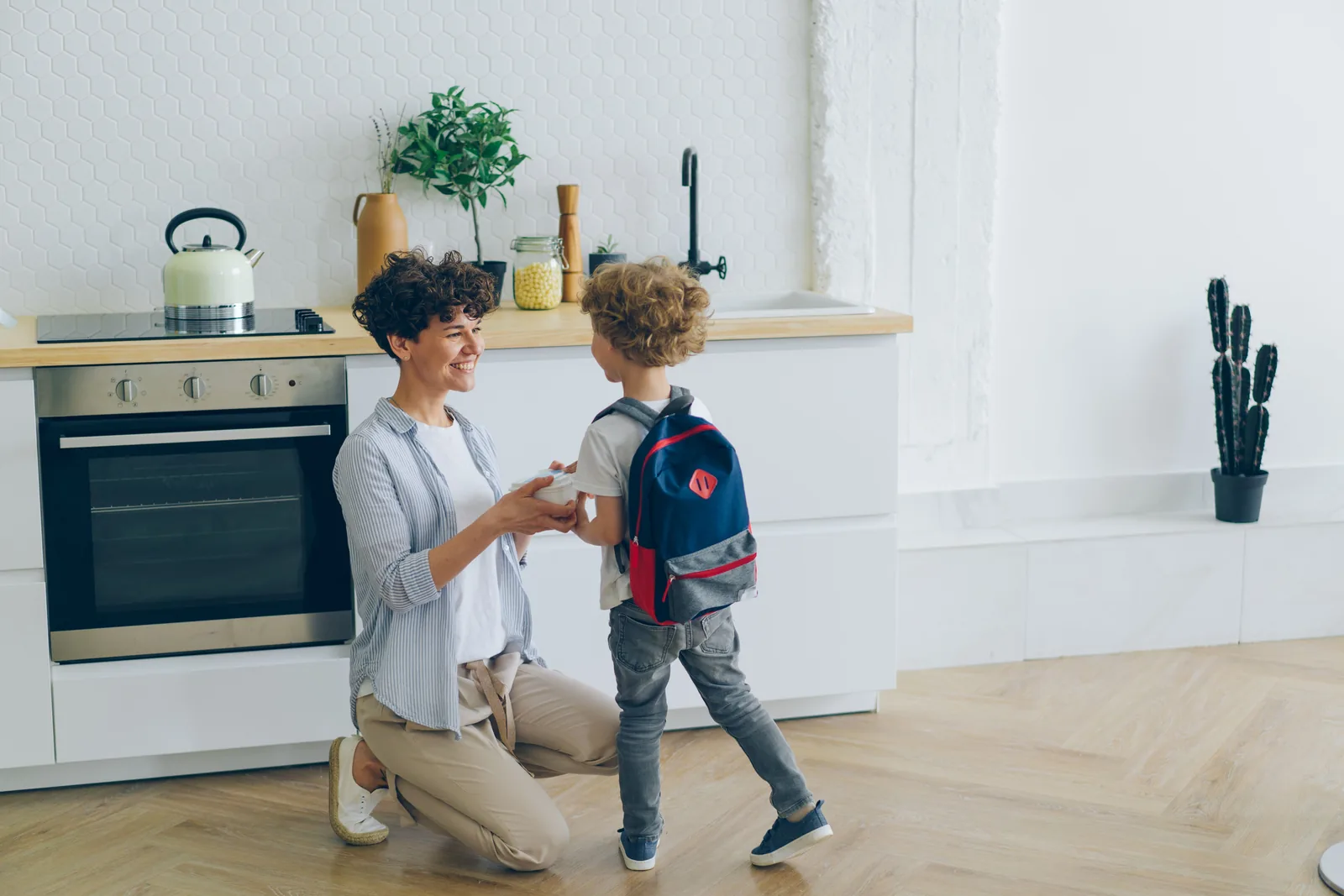
School mornings rarely fall apart because nobody knows that kids need breakfast, clothes, teeth brushed, and a backpack. They fall apart because too many small decisions are happening at the same time: where are the shoes, what goes in the lunch box, did anyone sign the form, and why is the water bottle still in the dishwasher?
A calmer back-to-school morning routine doesn't ask everyone to move faster. It moves as many decisions as possible out of the morning, gives the things that leave the house a permanent home, and uses a few simple checkpoints so you can see what still needs to happen.
Most morning stress comes from friction rather than the number of tasks. A missing shoe can derail five minutes. A lunch box that wasn't emptied yesterday creates another job. A backpack on the bedroom floor means someone has to remember it at the last possible moment.
The easiest way to reduce that friction is to separate your system into two parts: night-before decisions and morning actions. The night before is for choosing, finding, packing, and checking. The morning is for getting dressed, eating, finishing personal care, and leaving.
| Checkpoint | What happens | What should already be decided |
|---|---|---|
| Wake + dress | Bathroom, clothes, bed opened up | Clothes are chosen |
| Breakfast | Eat, water bottle, lunch pickup | Lunch components are ready |
| Ready zone | Teeth, hair, shoes, outerwear | Shoes and coats have a home |
| Door check | Backpack, lunch, water, extras | Bag was packed last night |
Set a tiny evening checkpoint instead of trying to “get organized” for tomorrow. Five focused minutes is enough for most households:
The exact clock time can change. The order should not. A predictable sequence is easier for children to learn and easier for adults to supervise without repeating ten separate reminders.
A school-day breakfast does not need endless choice. Too many options create questions and extra cleanup. Keep two or three reliable breakfasts available and let variety happen on slower days.
A simple breakfast zone can hold bowls, cereal or oats, napkins, and other everyday items together. If children can safely serve part of their own breakfast, put those items where they can reach them. The aim isn't independence for its own sake; it's removing unnecessary traffic and requests from the busiest part of the morning.
Your morning routine is only as good as the physical setup supporting it. Backpacks need hooks or a defined landing place. Shoes need a contained zone. School papers need somewhere other than the kitchen counter. Lunch gear needs a repeatable kitchen home.
If you haven't set this up yet, start with the Back-to-School Home Reset. You do not need a custom mudroom. A few hooks, a basket, and a paper tray can remove a surprising amount of daily friction.
For younger children, post a short routine where they actually get ready. Keep it to five or six actions. “Dress → breakfast → teeth → shoes → backpack” is more useful than a beautiful chart containing fifteen tiny tasks.
For older children, the routine may simply be a door checklist. The goal is to move the remembering out of your head. If you are saying the same four things every morning, those four things belong on the checklist.
A buffer is not thirty empty minutes. Ten minutes between “we should be ready” and “we must leave” is often enough to absorb normal family life. Protect that buffer by treating the target time as the time everyone should be at the door, not the time they should begin looking for shoes.
| If you leave at… | Aim to be door-ready by… | Use the buffer for… |
|---|---|---|
| 7:45 | 7:35 | Missing item, bathroom trip, weather change |
| 8:00 | 7:50 | Last-minute paper, water refill, slow shoes |
| 8:30 | 8:20 | Normal delays without panic |
Don't try to perform the full routine at double speed. Switch to the minimum version:
This is why the night-before setup matters. A late wake-up is much easier to recover from when nobody also needs to locate homework, clean a lunch container, and choose an outfit.
How early should kids wake up for school?
There isn't one correct number. Work backward from your leave time using the routine your household actually needs, then add a modest buffer. If everyone routinely has twenty unused minutes, you can adjust later.
Should we make lunches at night or in the morning?
Prepare whatever stores well the night before and leave genuinely last-minute items for morning. More important than doing everything at night is making sure containers are clean, choices are made, and the remaining ingredients are easy to grab.
What if my child keeps forgetting one thing?
Move the reminder to the place where the action happens. If the water bottle is forgotten, put “WATER” on the door checklist or place the bottle beside the lunch box rather than relying on another verbal reminder.
How long does it take for a new morning routine to stick?
Expect the first couple of weeks to require more prompting. Keep the order stable rather than redesigning the system after every difficult morning. Adjust only the specific friction points you keep seeing.
Build the school-year routine one small system at a time:
Want a calmer weekly rhythm around the school routine? Use the free Weekly Cleaning Schedule to keep household tasks from landing on already-busy mornings.
Get the Free Weekly ChecklistA calm school morning is not one where nobody ever forgets anything. It's one where the ordinary tasks have an obvious order, the important things already have a home, and one small delay doesn't turn into a house-wide emergency. Prepare the decisions at night, follow the same checkpoints in the morning, and leave yourself ten minutes of breathing room.
Set up the simple home systems that make the first school weeks easier.
Read the post →A practical landing place for the things that leave the house every morning.
Read the post →