Home Organization by Room
Simple Filing System for Important Papers
A calm, low-maintenance filing system for household documents.
Read the post →
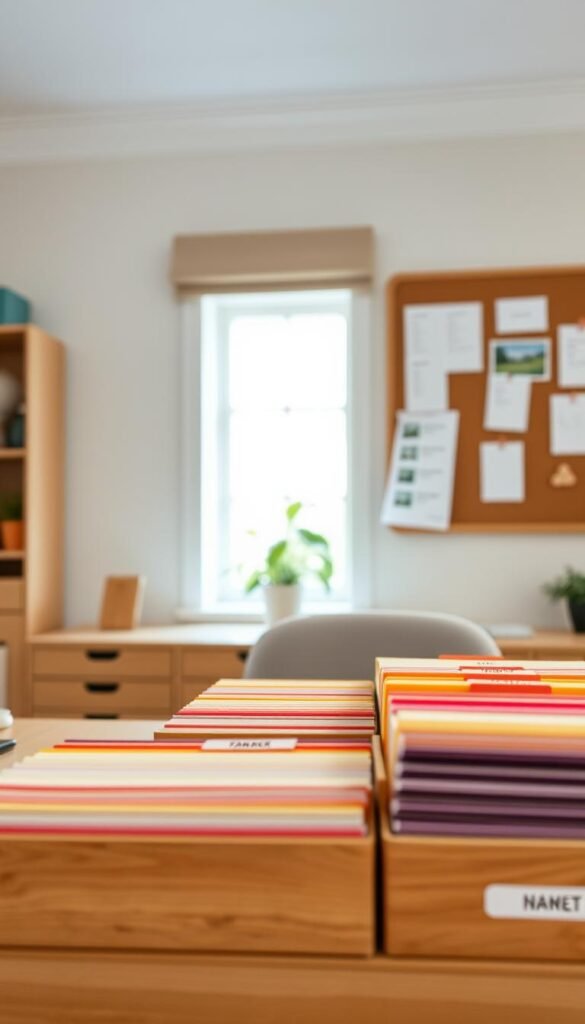
A home management binder sounds like a bigger project than it actually is. Most people who try to build one get stuck deciding on the "perfect" system before they've put a single page in it — which means the binder never actually gets built. This is the version meant to actually get finished: pick it up, assemble it in one sitting, and refine it later once you know what you're really using.
The goal isn't a beautiful, color-coded system on day one. It's one place where the household's important information lives, instead of scattered across your phone, your memory, and a stack of loose papers.
A three-ring binder, a pack of dividers, some clear sheet protectors if you have them, and about an hour to set up the basic structure. No special printables required to start — you can add those later.

| Section | Holds |
|---|---|
| Calendar & key dates | Birthdays, renewals, recurring appointments |
| Household contacts | Doctors, contractors, schools, emergency numbers |
| Finances | Bill due dates, account references, tax documents |
| Home maintenance | Warranty info, service records, manuals |
| Family information | Medical info, school details, passwords reference |
The single biggest factor in whether a binder gets used isn't what's in it — it's where it lives. A binder stored in a closet, a home office nobody visits daily, or a high shelf quietly stops being part of the household's actual routine within a few weeks, no matter how well it was built. The best spot is somewhere you're already passing through regularly: a kitchen counter shelf, a spot near where mail lands, a shelf in a mudroom or entryway. It should be visible enough that using it feels like the easy option, not a special trip to go retrieve it.
If more than one adult manages the household, build the binder together rather than one person assembling it alone and explaining it later. A quick quarter-hour walkthrough — what's in each section, where it lives, how it gets updated — means both people can actually rely on it, not just the one who built it. This matters most in the exact moments a binder is meant to help: an emergency, a trip where one partner is away, or simply a normal week where either person might need to find something without asking the other.
Skip buying elaborate printable inserts before you know what sections you'll actually use — plain lined paper works fine for the first version. Skip trying to digitize everything as an alternative; a physical binder has real value specifically because it doesn't depend on a device or password to access.
Do I need special printables to get started?
No — plain paper and dividers are enough for a working first version. Printables can make it prettier later, but they're not what makes the system function.
How often should I update the binder?
A quick monthly check to file anything from the "current" pocket keeps it current without needing a bigger, less sustainable maintenance routine.
What's the difference between this and a family command center?
A command center is typically a visible wall system for the week's active information; a binder holds the deeper, less frequently changing information — both work well together rather than replacing each other.
Should everyone in the household have access to it?
Generally yes — a binder only one person knows about or can find loses much of its value in an actual emergency or when that person isn't home.
What if I start and then abandon it partway through?
That's common with a first attempt — the fix is usually to simplify rather than push through. Cut back to two or three sections that matter most, get those genuinely working, and expand only once that smaller version has stuck.
Is a binder worth it for a household of one?
Yes, arguably even more so — with no one else to ask for information in an emergency, having it written down and easy to find matters just as much, if not more.
Want to know exactly what to include in each section? See The New Year Home Binder for the full contents checklist.
Read the Binder Contents GuideA home management binder doesn't need months of planning — it needs five sections and an hour to start. Build the basic structure now, and let it grow into exactly what your household actually needs over the weeks that follow.
A calm, low-maintenance filing system for household documents.
Read the post →A low-clutter family hub for calendars and papers.
Read the post →